Skip to content
Hand Struck Stamps
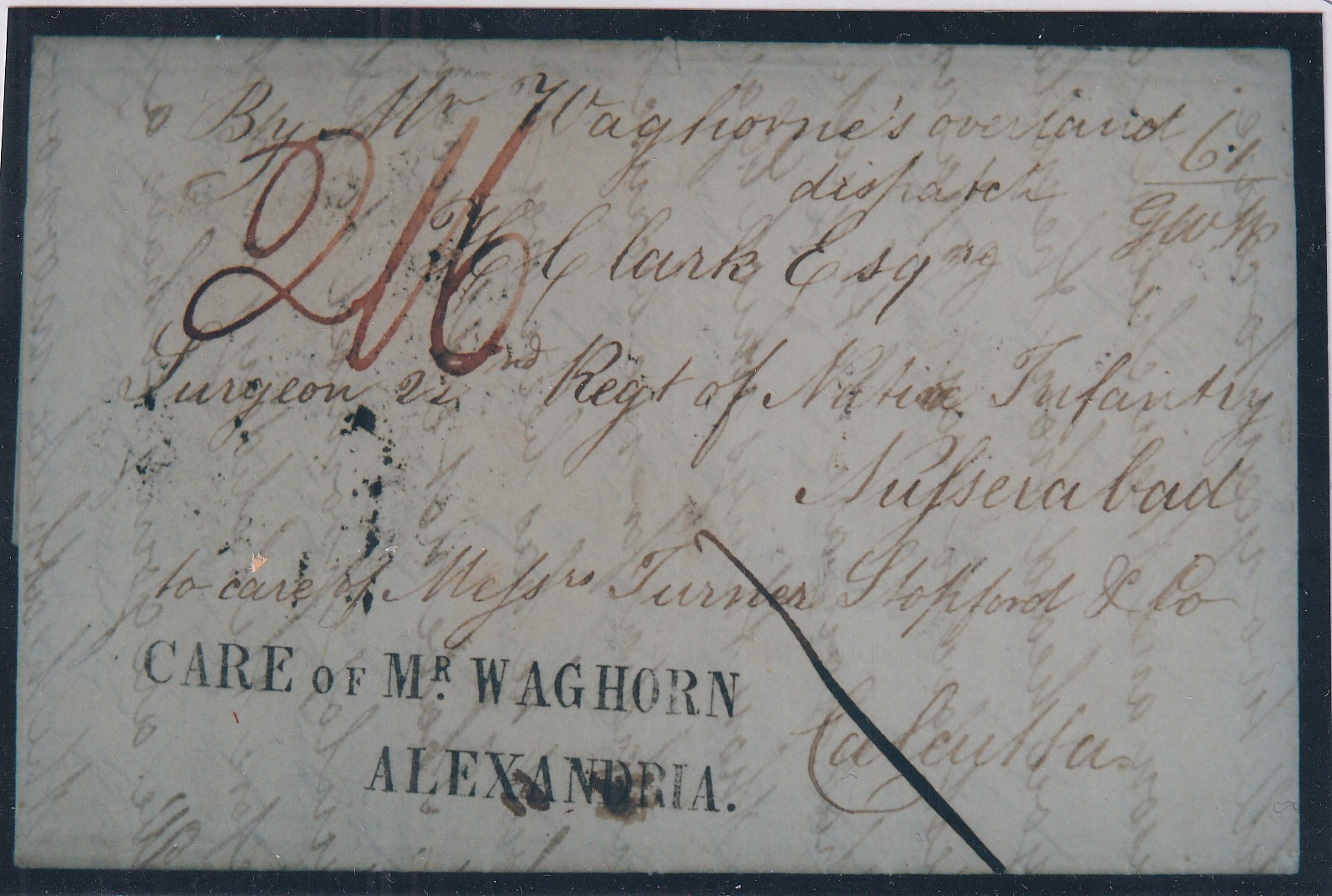
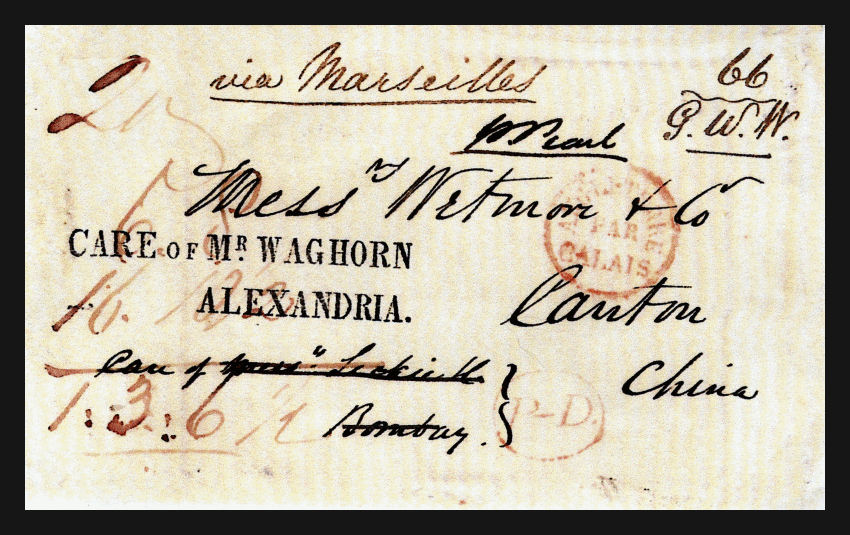
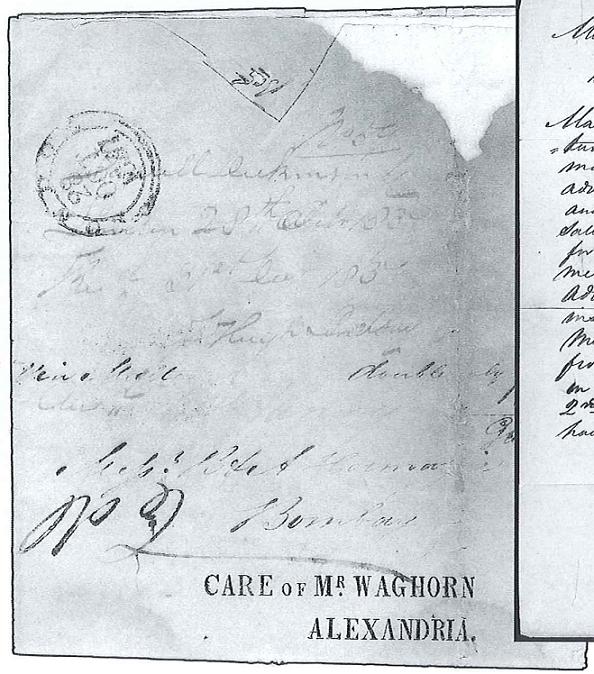
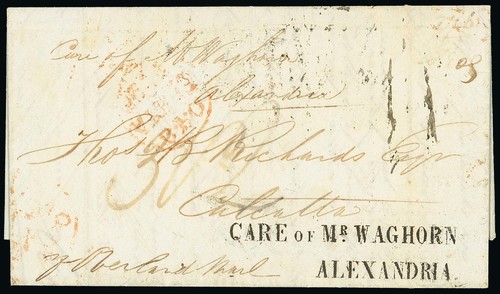
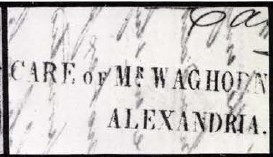
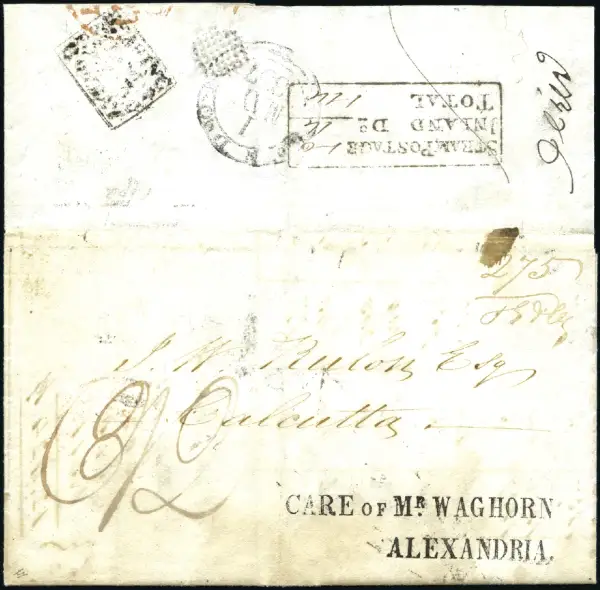
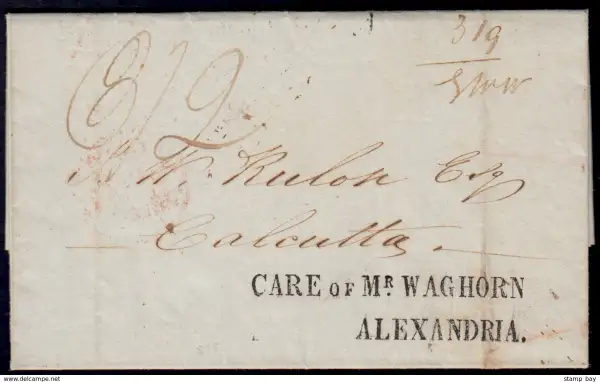
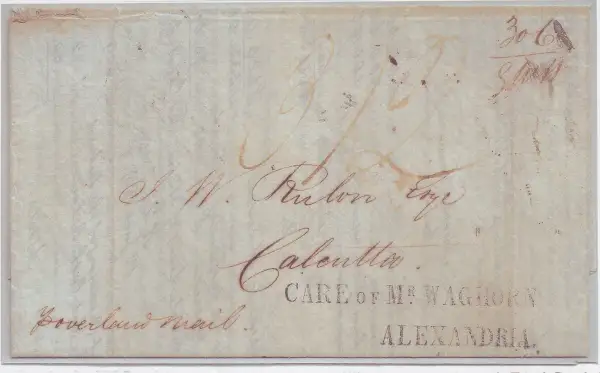
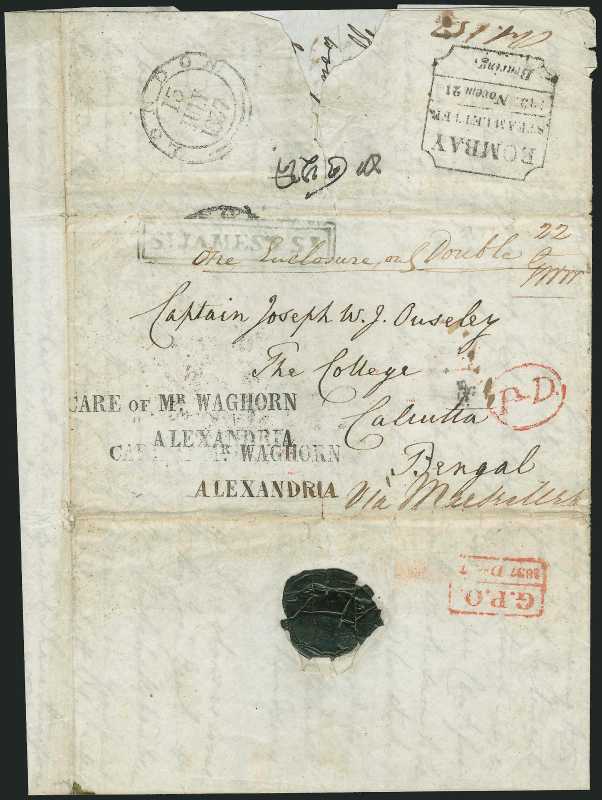
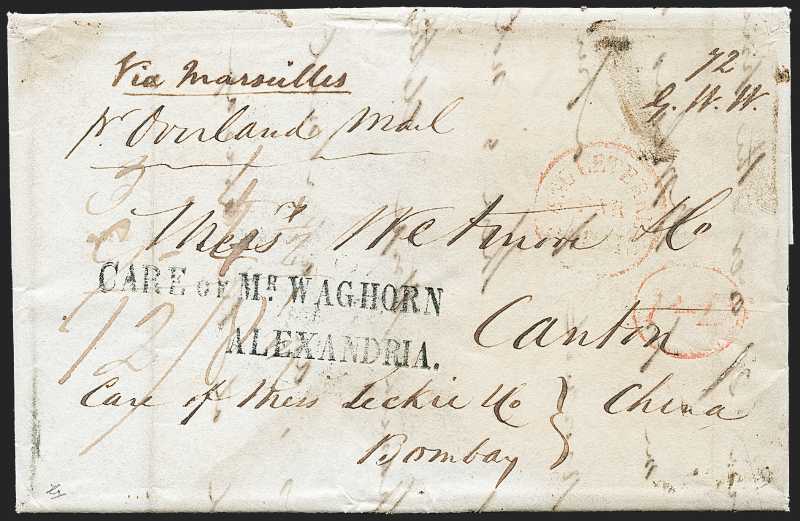
Waghorn Sidebottom 4 — marking, 1836–1839, Black

Forwarding Agent · Marking

Waghorn Sidebottom 4

Date
1836–1839
Colour
Black
Rarity
Very common
Note
Smith 4
Submitted by
System

Census

Census records

65 covers recorded
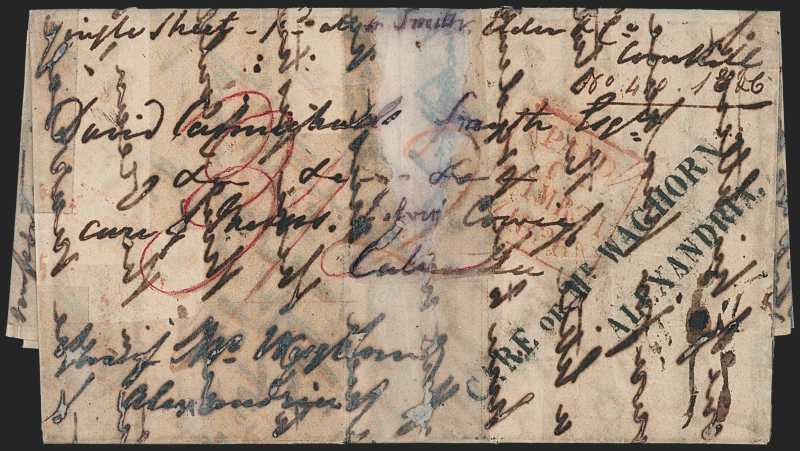
Pre-stamp cover of India — COV-5692, 26 May 1838
COV-5692

26 May 1838

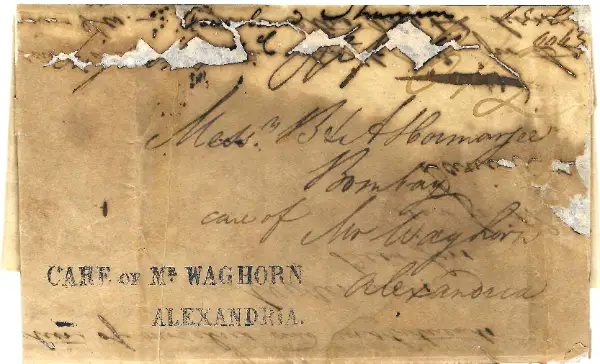
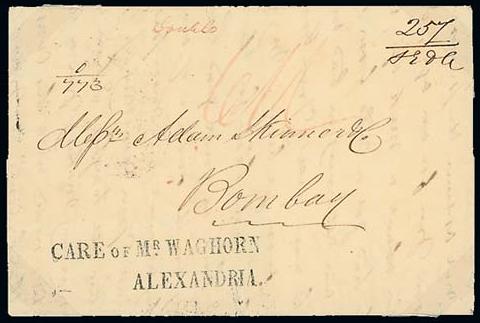
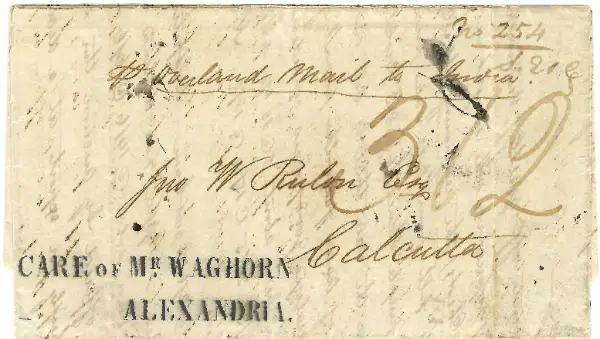
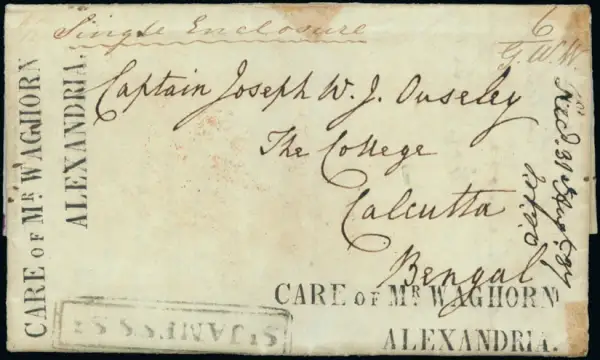
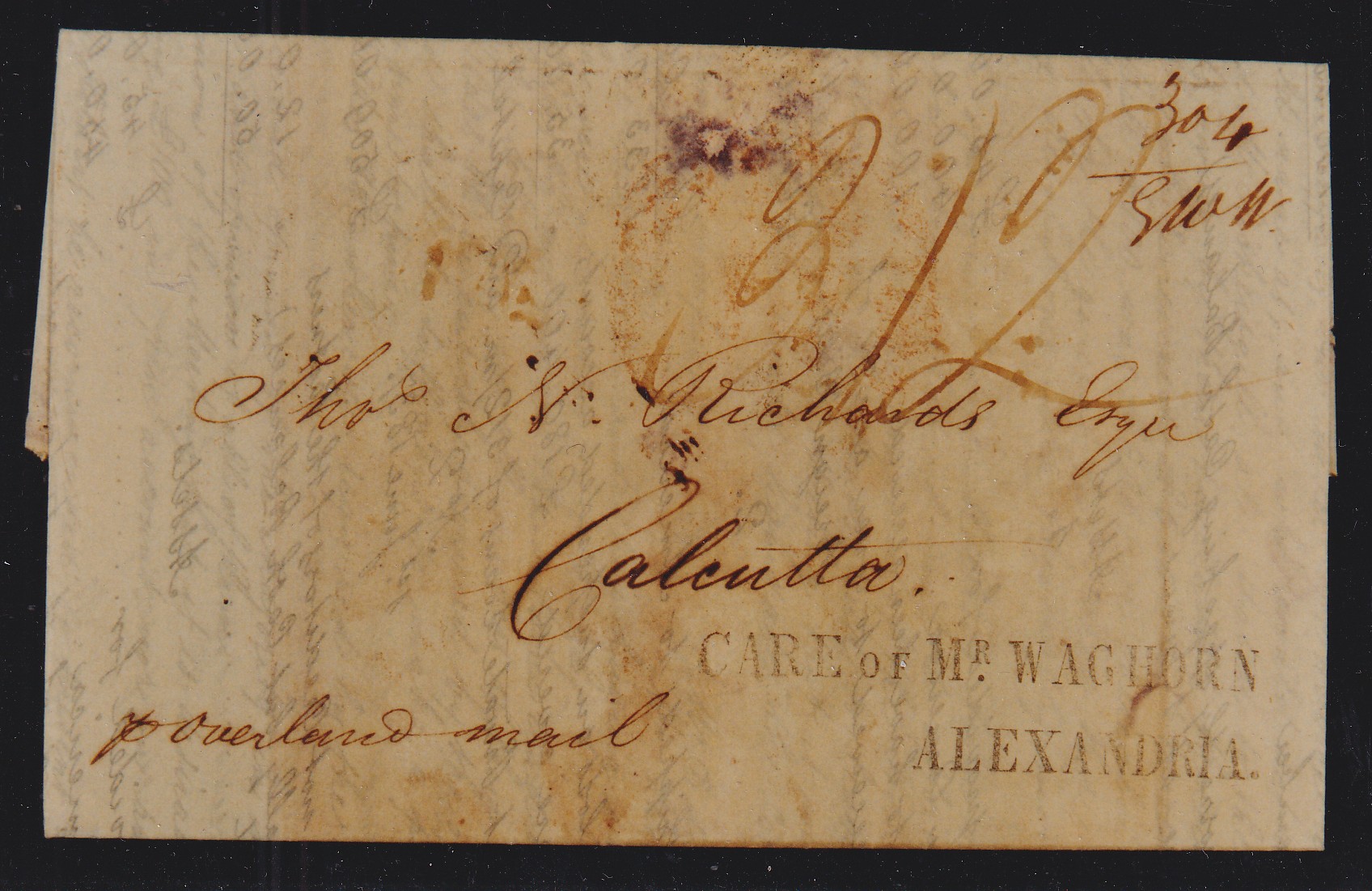
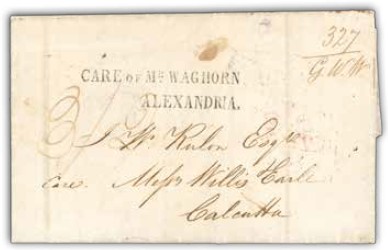
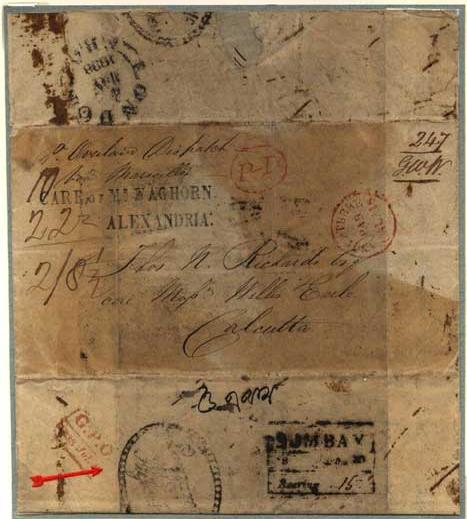
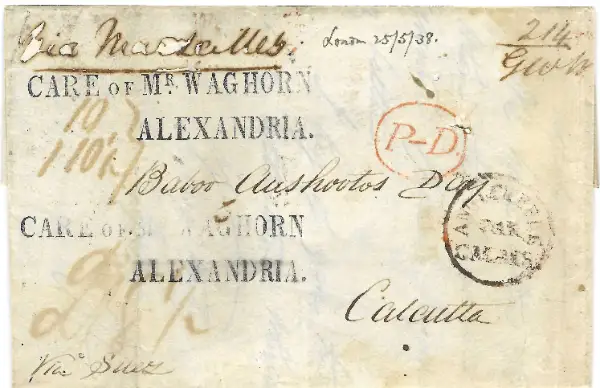
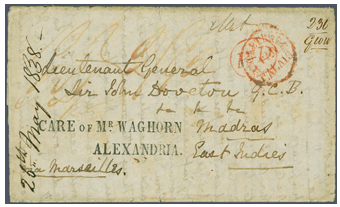
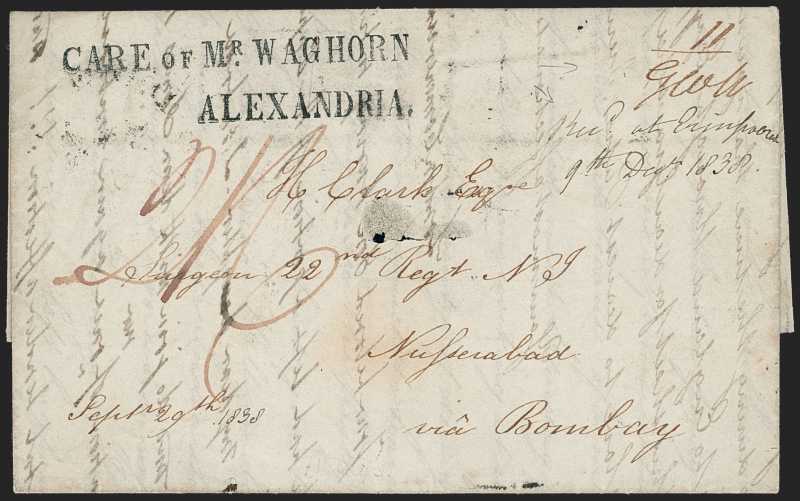
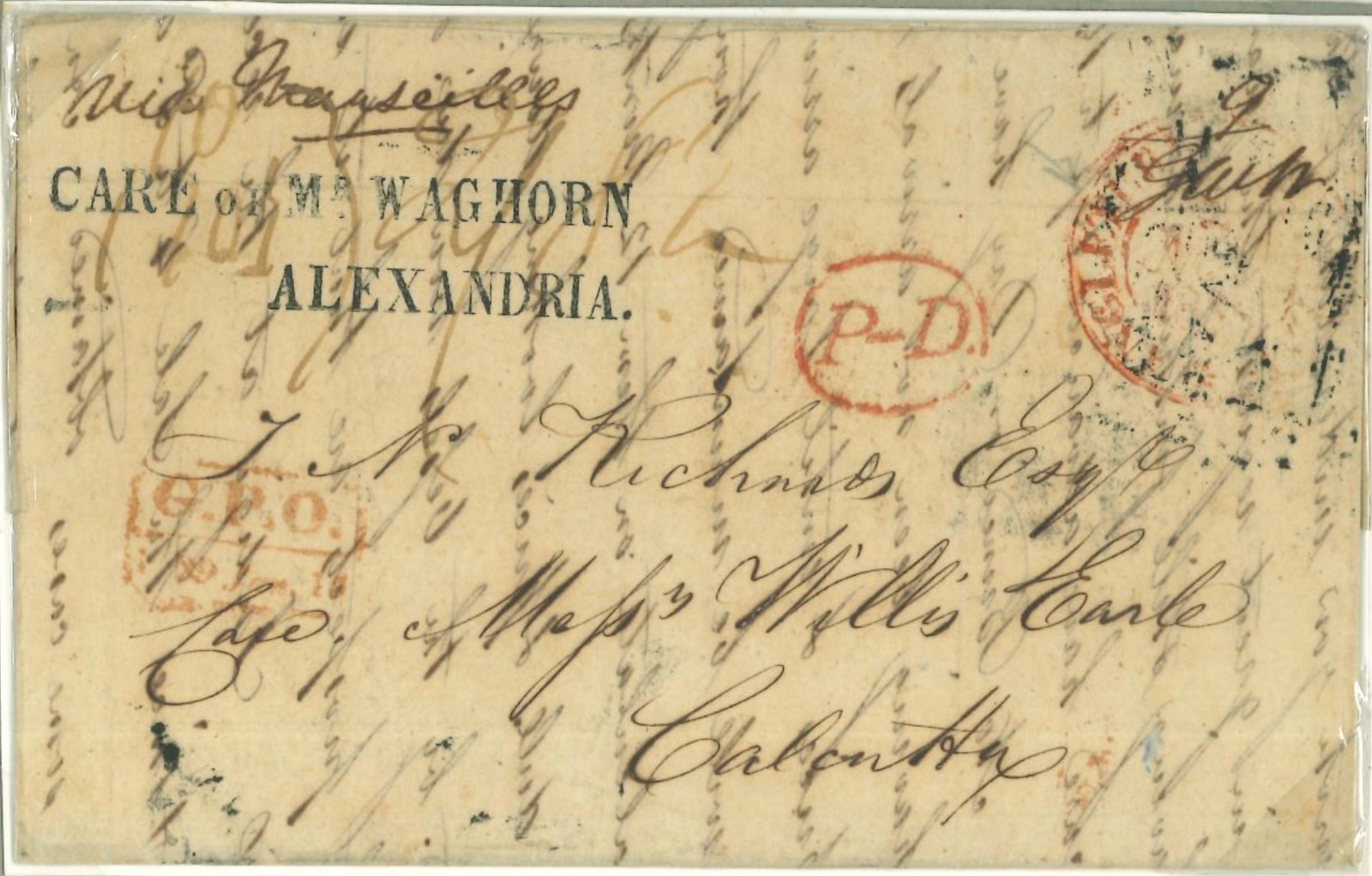
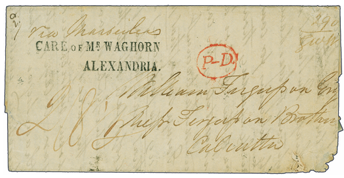
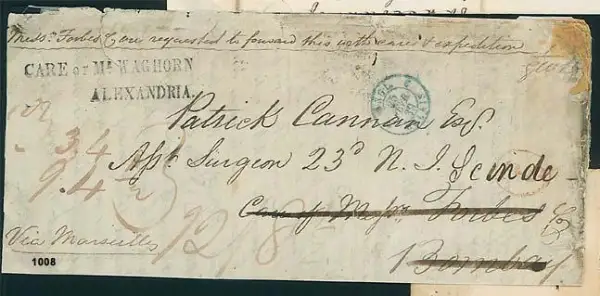
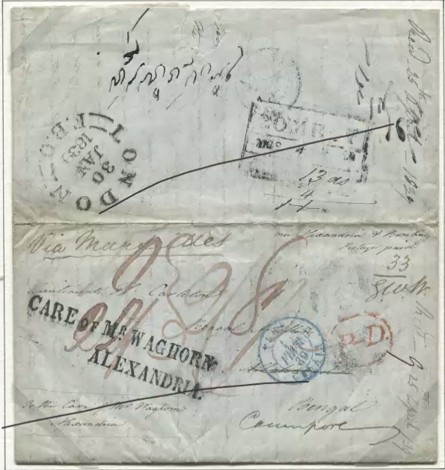
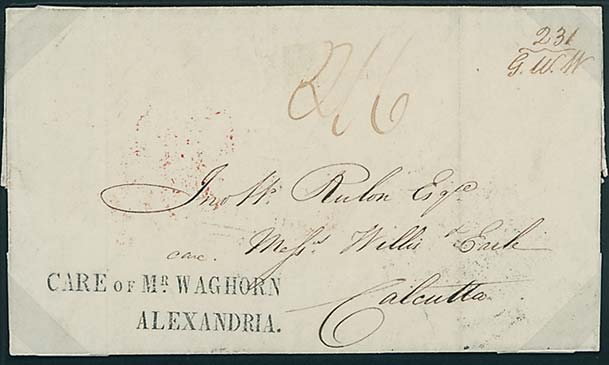
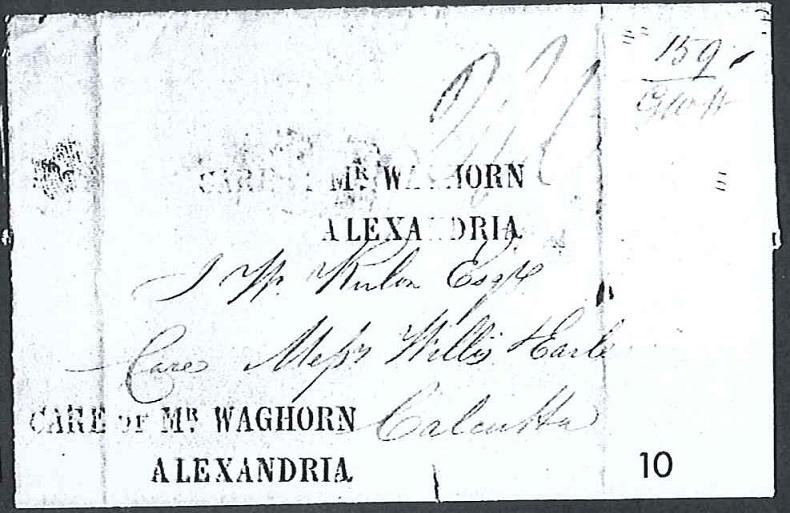
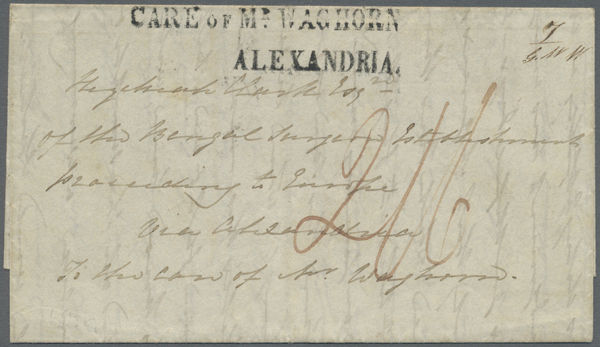
Corinphila - 1838 (May 26): Prepaid entire letter from London to Lieutenant General Sir John Doveton in Madras, East Indies endorsed "via Marseilles" in manuscript, and rated "2/8½d." in red manuscript (10d. British postage, 1/10½d. French postage for an under ¼ ounce letter), numbered "230 / GWW" (George W. Wheatley, Waghorn's Agent in Falmouth) in top right corner; struck with superb "CARE OF MR. WAGHORN / ALEXANDRIA" handstamp in black (Sidebottom type 4b) with London despatch cds in black on reverse (May 26) and framed Bombay arrival (Aug 11) in black where charged 12 annas for onward transmission to Madras with faint GPO arrival (Aug 19). A fi ne and rare entire - strangely letters to Madras are very rare. Signed Todd AIEP. Note 1: Journey time to Bombay 77 days. Note 2: Fine content "I wrote to you about 12 days ago by the lst Steamer for India...there will be no Overland Packet till the middle off next month but this I shall send through the P.O. in Paris and on to Marseilles, to be put on board a French Steamer for Alexandria, trusting to its fi nding its way there...". Note 3: The addressee, Lieutenant General Sir John Doveton (1768-1847) was a career Soldier, fi ghting under Lord Cornwallis against Tippoo Sultan in 1799 and under Arthur Welleseley the following year. He later was in command at Nagpur against Apa Sahib's forces and stormed the Palace with great loss of life (some 500 offi cers and men of the Madras Infantry died). Provenance: Harmers, London, 27 May 1999, lot 1100

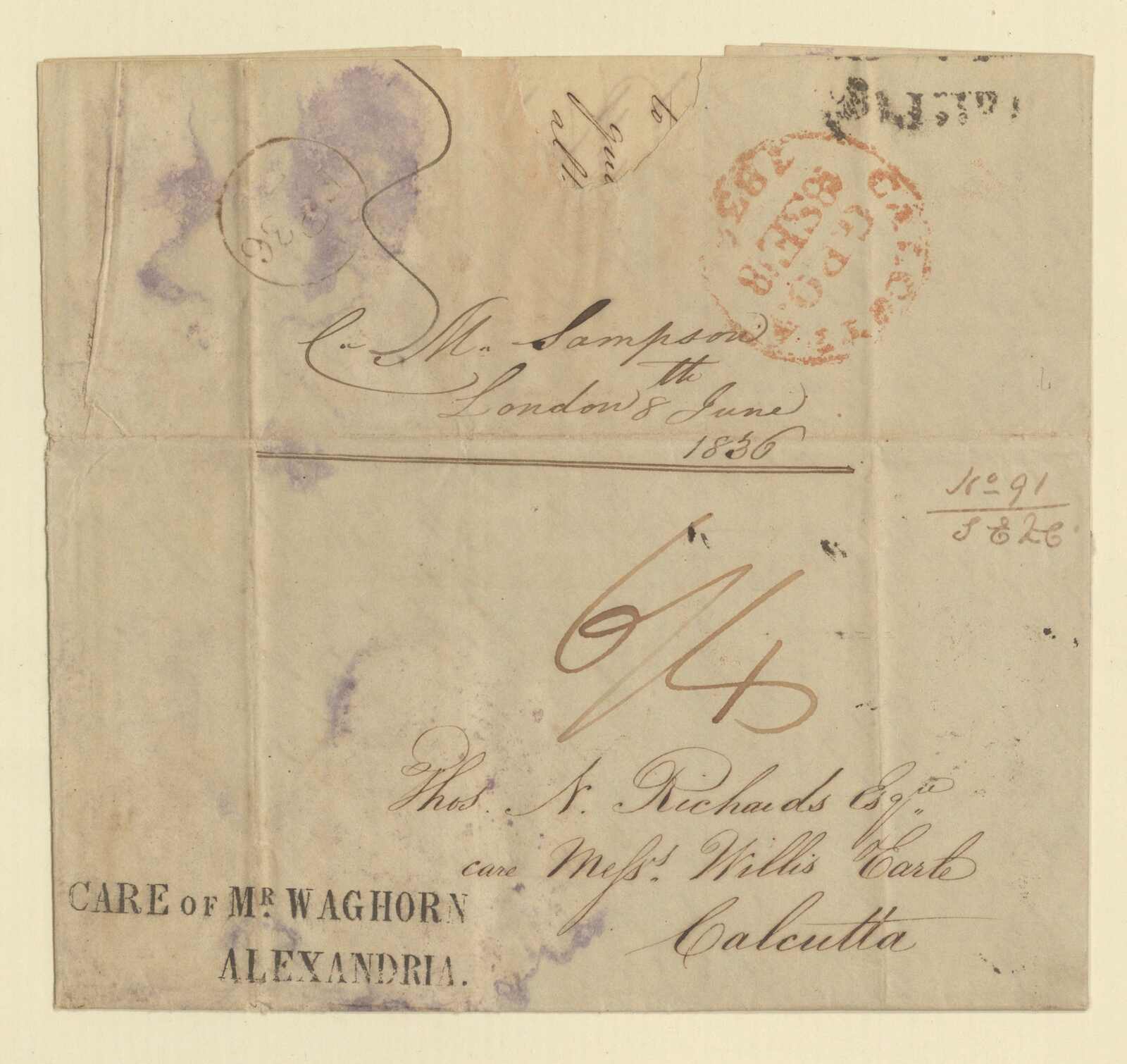
Pre-stamp cover of India — COV-3079, 28 October 1838
COV-3079

28 October 1838

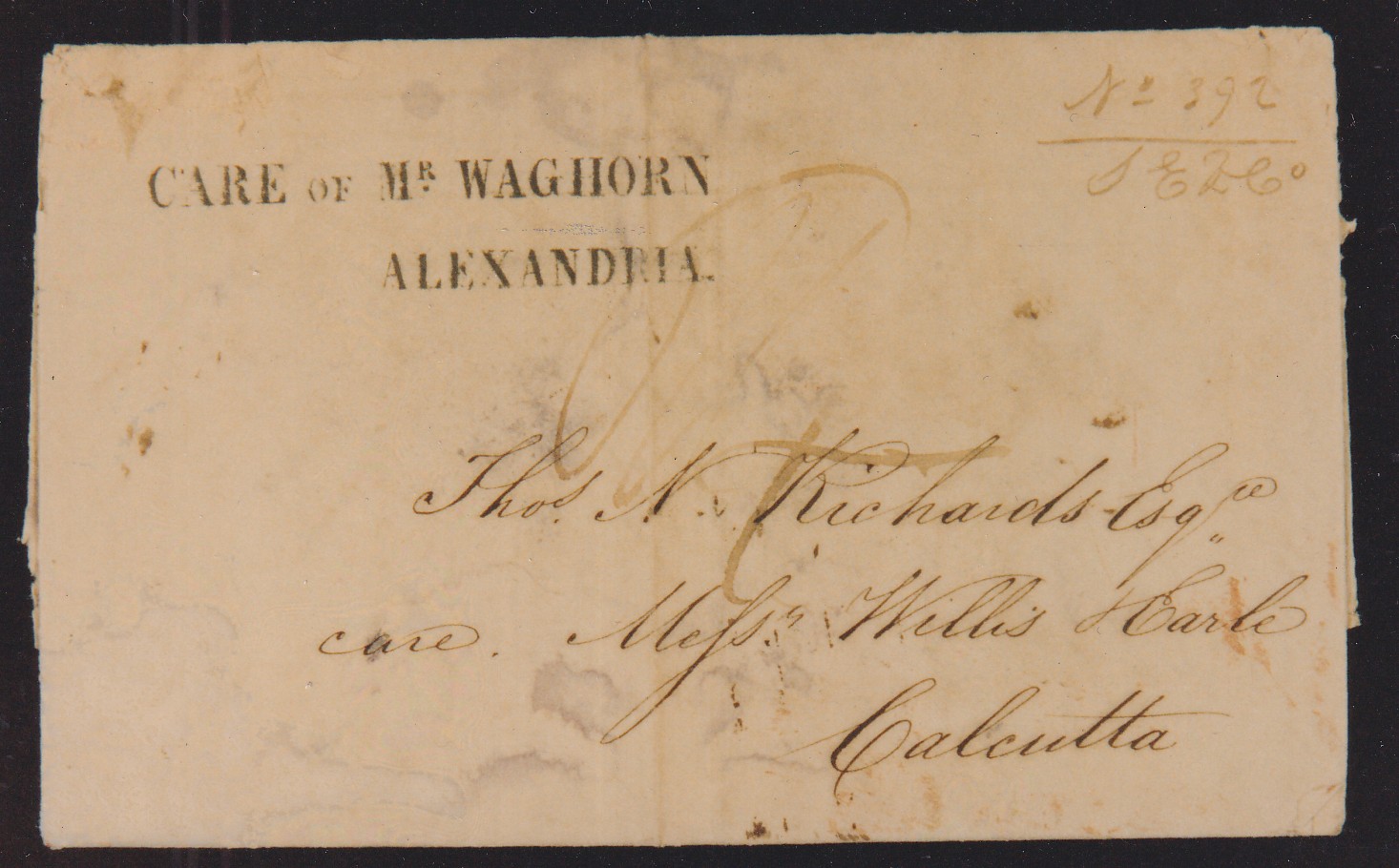
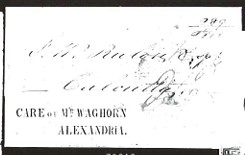
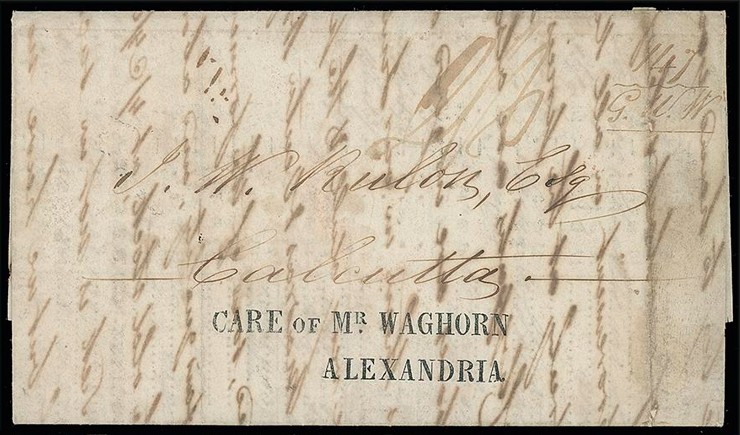
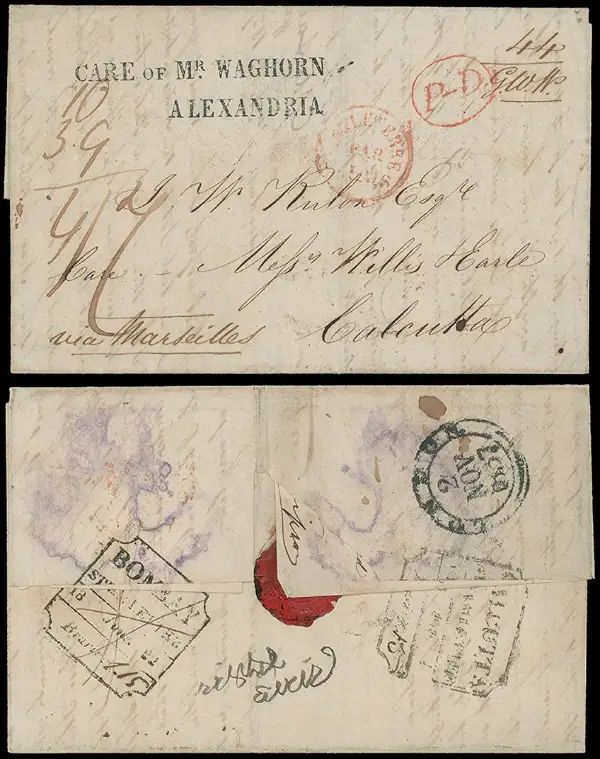
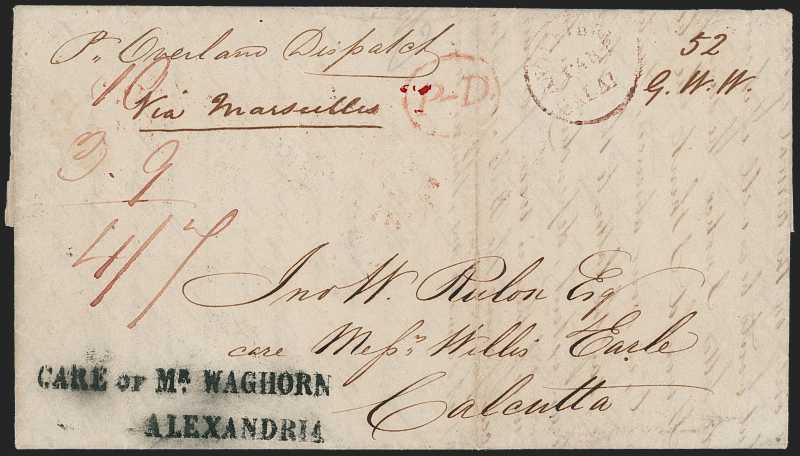
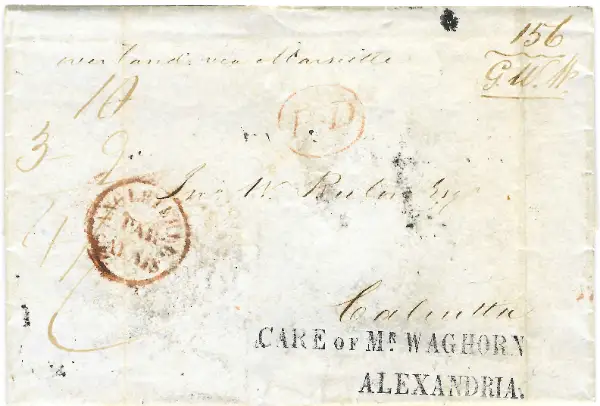
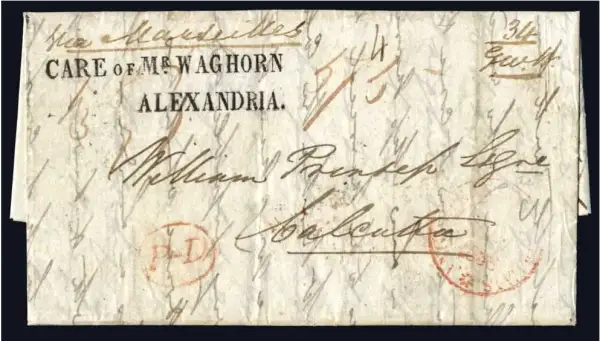
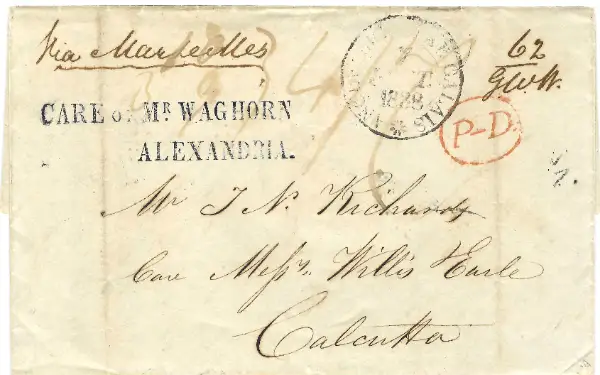
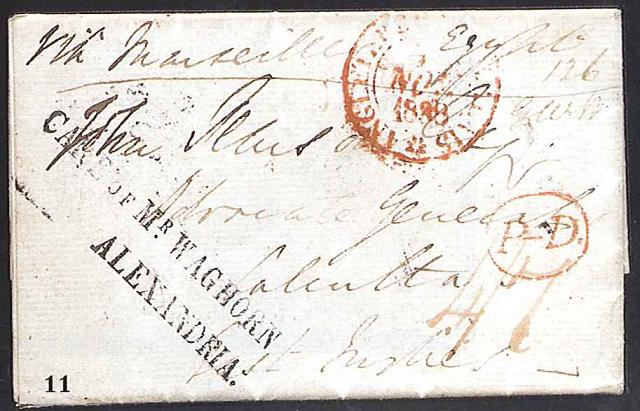
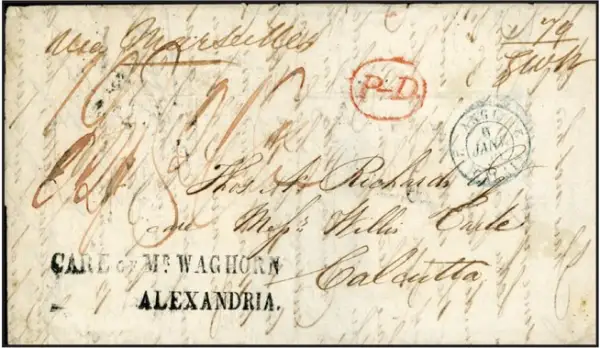
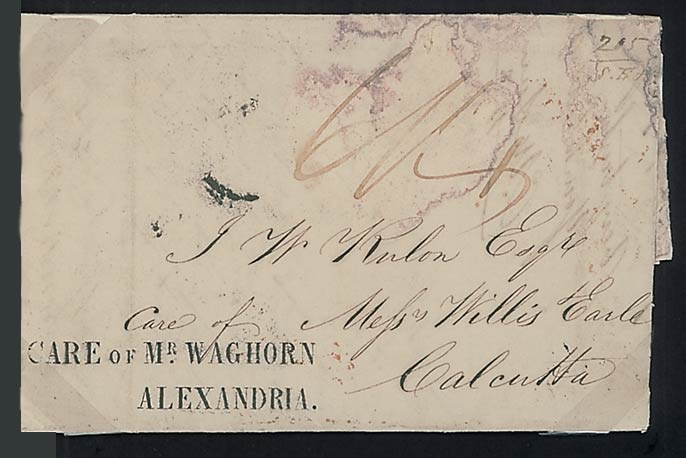
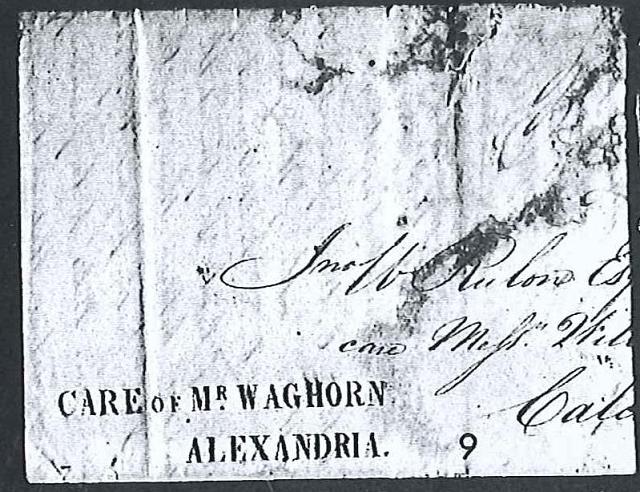
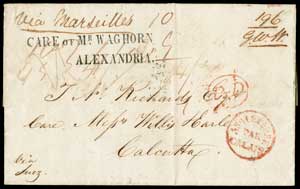
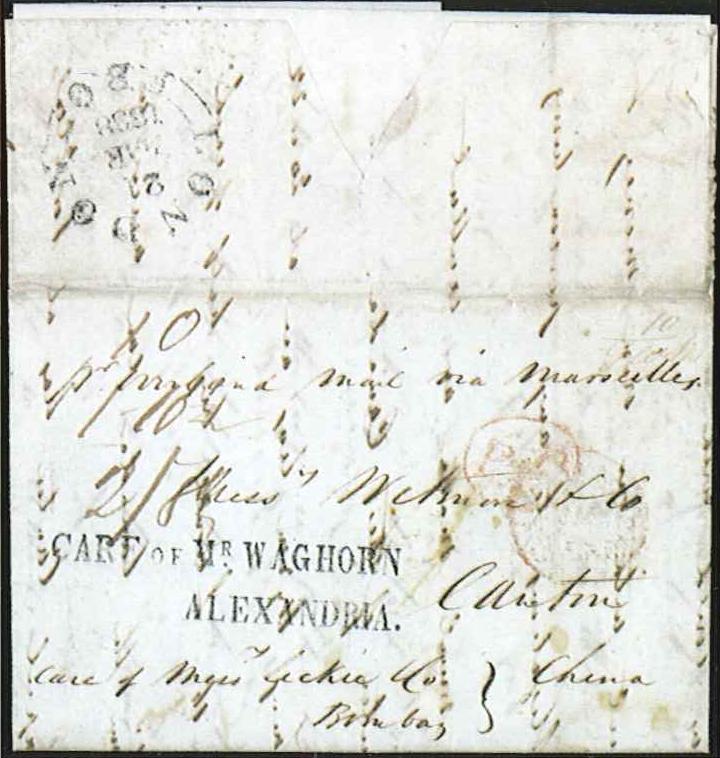
Postal cover from waghorn (), bearing Unknown handstamp in unknown. Dated 1838. Scarce example of postal history from this office. Corinphila - 1838 (Oct 28): Prepaid entire letter at double rate from London to John Pearson, Advocate General in Calcutta, endorsed "via Marseilles & Egypt", annotated "126 / GWW" (George W. Wheatley), rated "4/7d." in red manuscript (10d. British postage + 3/9d. French postage for a letter under ½ ounce) struck with fi ne "CARE OF MR. WAGHORN / ALEXANDRIA" in black (Sidebottom type 4b), with London despatch cds (Nov 5) on reverse in black. Circular "Angleterre Par Calais" cds in red and oval "P-D" in red, carried by the "Léonidas" from Marseille to Malta, thence on "HMS Volcano" to Alexandria and the EIC "Hugh Lindsay" from Suez; with reverse also showing framed BOMBAY arrival with "15" annas charge and Calcutta "G.P.O." arrival in red (10 Jan 1839). A fi ne entire with interesting content. Signed Todd AIEP. Note 1: Journey time 74 days. Note 2: Afghan War Content from the addressee's son: "This morning's papers tell us that the 16th Lancers are in the Field and a force of at least 10'000 men of ours, joined to Shah Soojah's and a strong body of Ranjit Singh's amounting to 30'000 men will advance upon Cabool by the fi rst of November...I am not of the disposition to sit quiet in England whilst my Regiment is in the fi eld abroad...I shall leave England on the 24th of this month...I have written to Mr. Waghorn in Egypt to lay horses etc. across the desert, as by this means I can save the steamer in the Red Sea and a month is of the greatest importance...". Provenance: Collection Max Uehlinger, Christie's, London, 12 March 1997, lot 11.

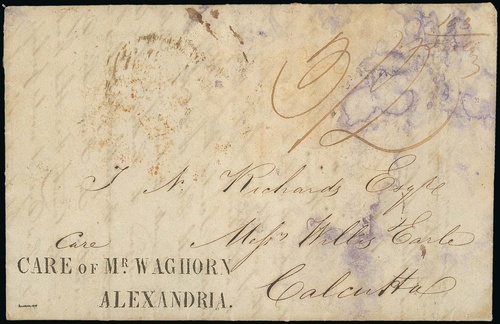
Pre-stamp cover of India — COV-1755, 25 January 1839
COV-1755

25 January 1839

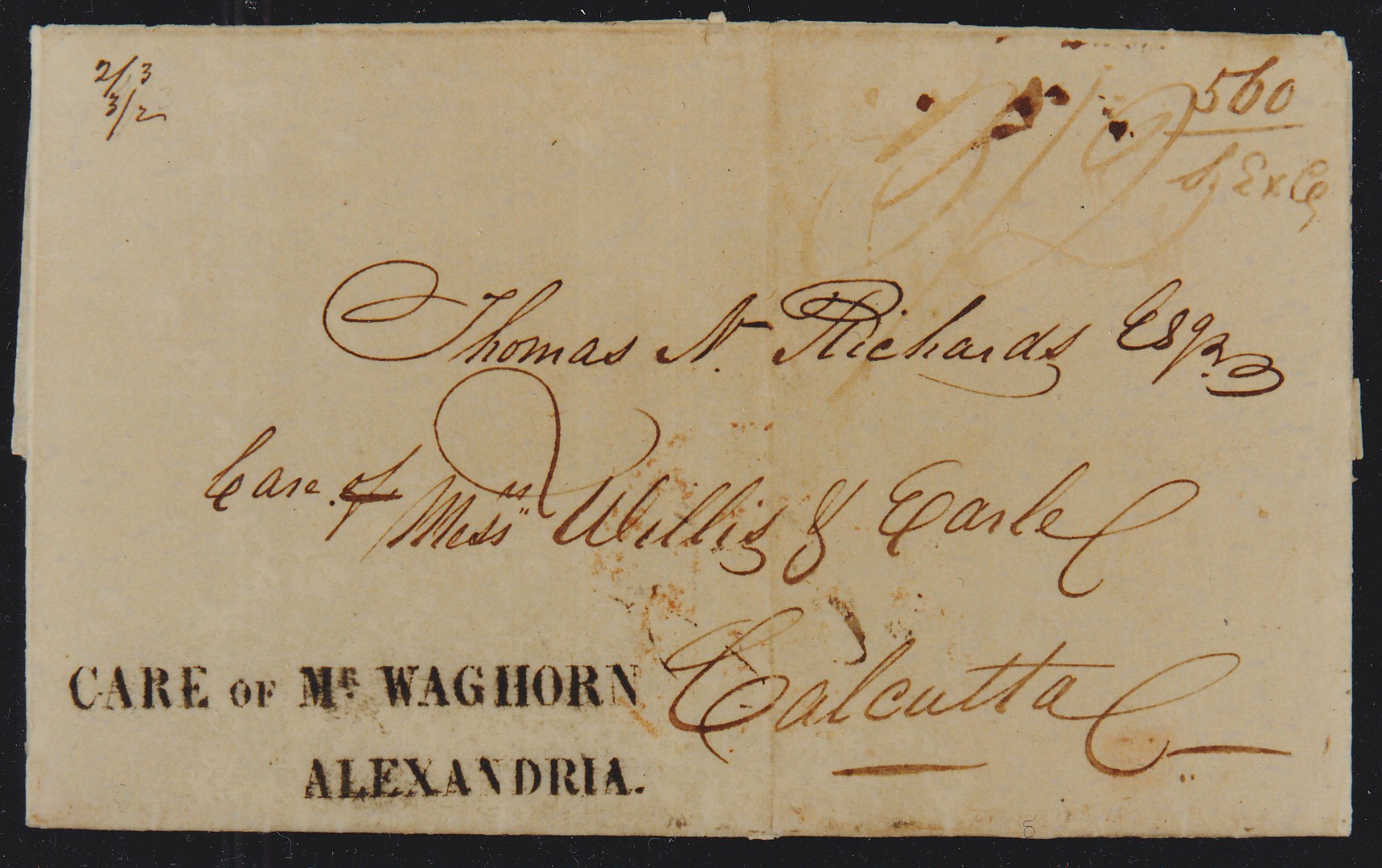
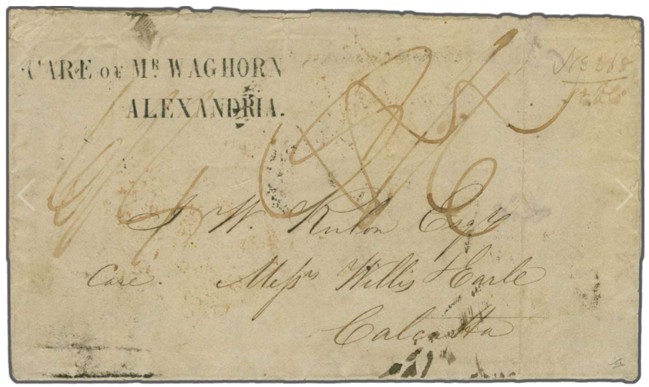
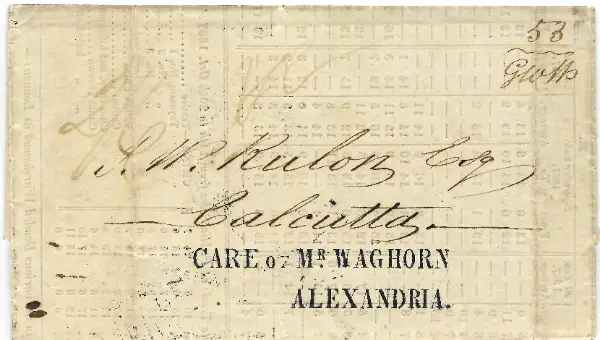
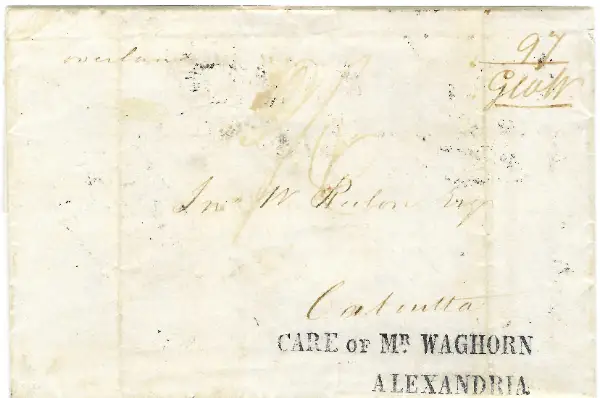
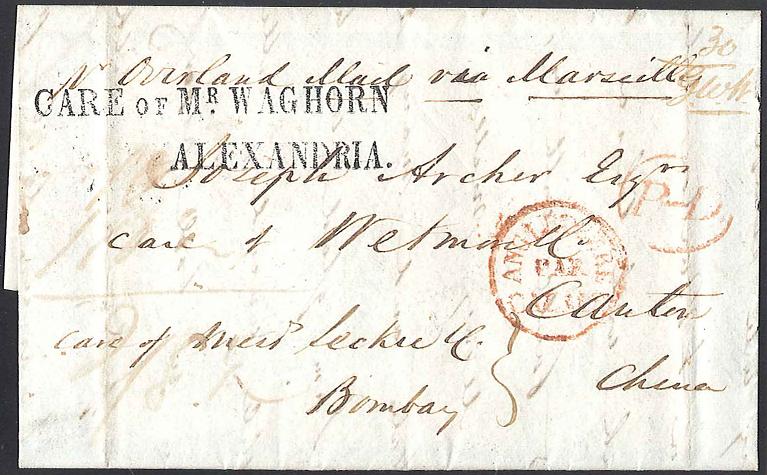
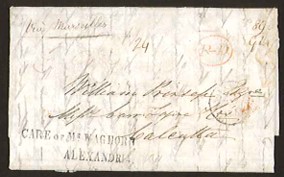
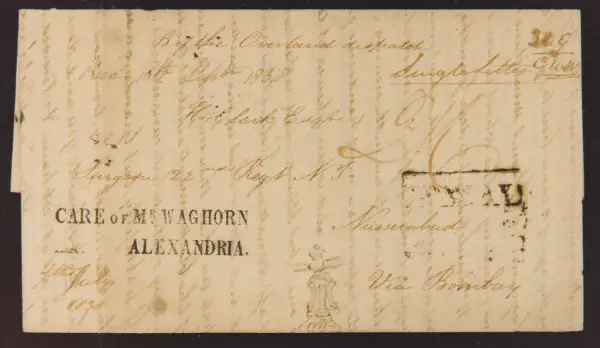
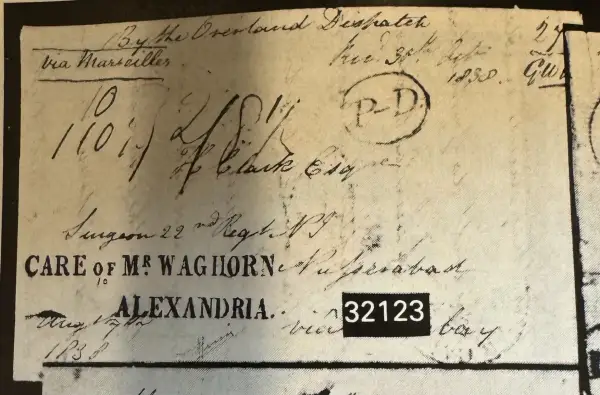
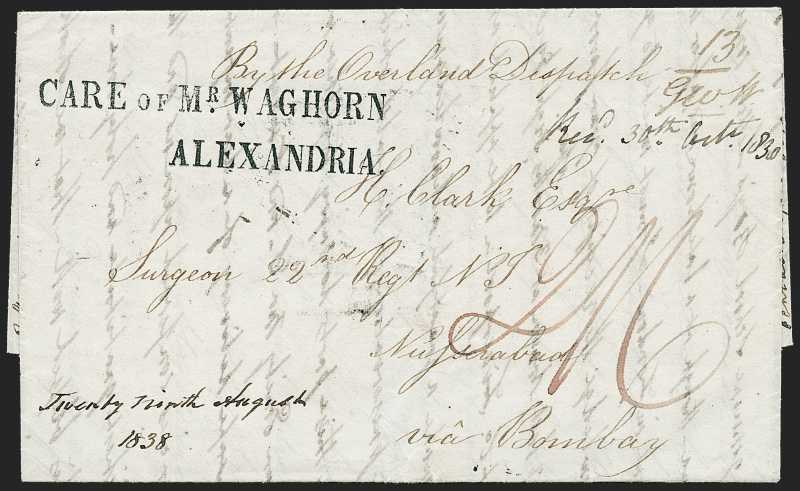
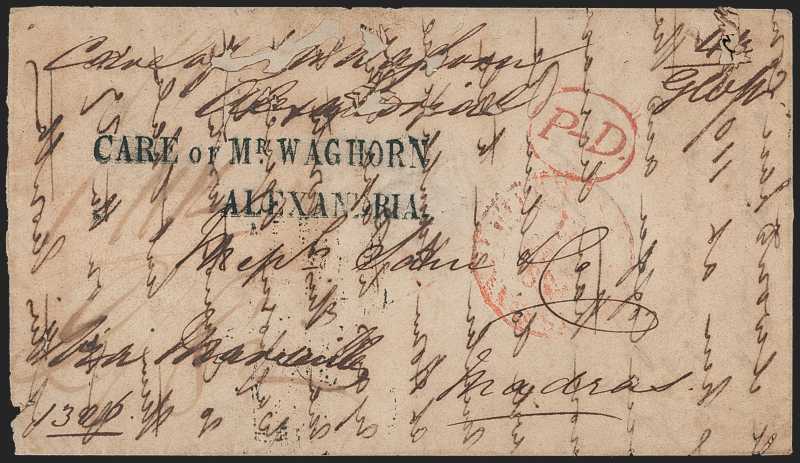
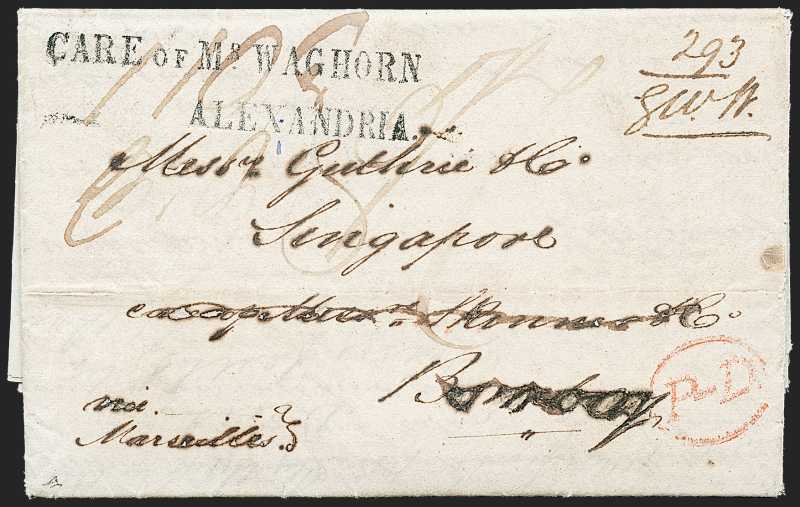
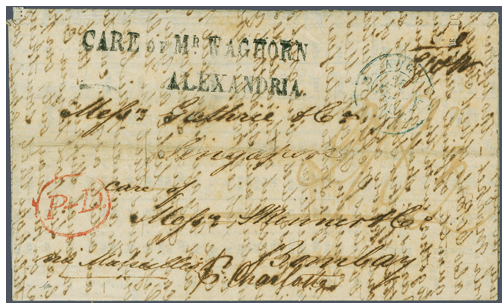
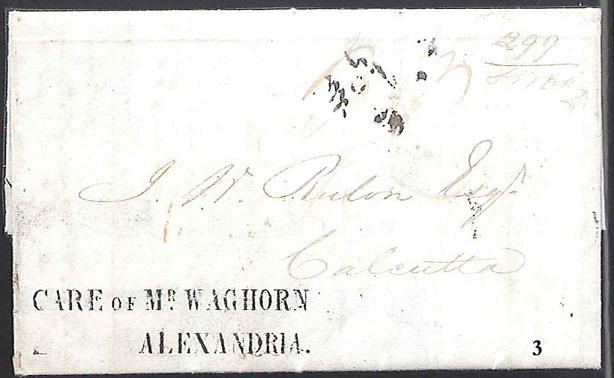
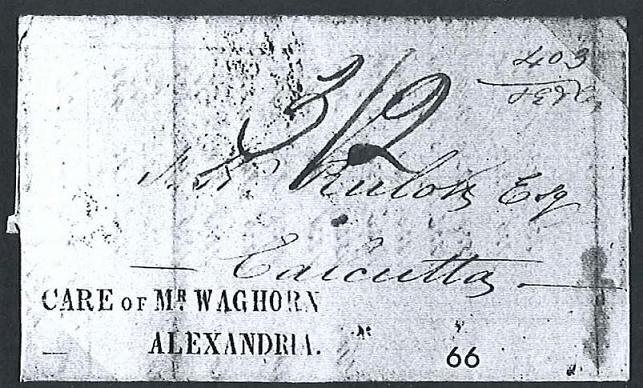
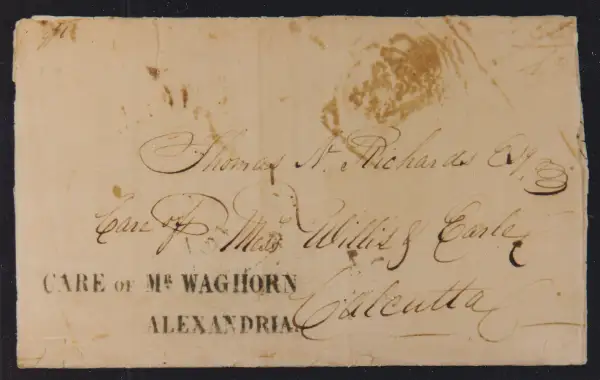
1839, "CARE OF MR. WAGHORN/ALEXANDRIA." (Sidebottom 4b; Smith 4b). Clear strike of two-line handstamp with manuscript "293/G.W.W." initials at top right belonging to George W. Wheatley (Waghorn's agent in London) on folded prices current and letter datelined London Jan. 25, 1839, and addressed to Guthrie & Co., Singapore, sender's directive "via Marseilles", black London F.B.O. despatch backstamp, red "P-D" oval, forwarded upon arrival in Bombay by Skinner & Co. to Calcutta with "Forwarded by Bond & Co., Calcutta" handstamp (Rowe Rarity 3) on back for onward transmission to Singapore, cover with some acid erosion due to ink and with some silking to prevent further erosion VERY FINE. ONLY A FEW WAGHORN COVERS ARE ADDRESSED TO SINGAPORE. A MAJOR DESTINATION RARITY OF THE WAGHORN OVERLAND EASTBOUND SERVICE. The recipient, Guthrie & Co., was founded in Singapore by Alexander Guthrie in 1821 and was the first British trading company in Southeast Asia. His business focused on providing British made goods for the Asian market and supplying Asian spices, sugar, and other goods to the British market. He eventually retired in 1847 and returned to London, handing over responsibility for the firm to his nephew. The company today, after merging with three other companies, is now the world's largest plantation group. The Type 4 handstamp (4a and 4b) is the most common of the Waghorn markings, with Smith recording 76 examples dated between Mar. 1, 1836, and May 5, 1839. Singapore is one of the rarest destinations for Waghorn mail on the eastbound journey. We located only three examples in our exhaustive survey of sale records.

Submit a cover

Have a cover from Waghorn Sidebottom 4?

Front (and back) image required. It is reviewed before publication — nothing appears immediately.

Images * — front & back (0/3)
Auction house (optional)

Type to search registered auction houses

About Waghorn Sidebottom 4

Sidebottom 4 is one of the early Waghorn markings, its earliest recorded strike falling in March 1836 and its use continuing to 1839. That opening date places it right at the beginning of the organised overland service, alongside Sidebottom 1 among the first cachets the agency put into circulation.
Recorded in black and listed as Smith 4, it saw several years of service across the agency's formative period. Covers bearing it span the years in which Waghorn's route was still contending with the older sea passage around the Cape, and each recorded example helps chart how heavily this particular mark was used before it gave way to later types.