
Hand Struck Stamps of India The postal markings of India, struck in ink before the first stamp of 1854.
A living record of 2,047 handstamps from 444 post offices with 5,206 census covers, drawn from the work of Hammond Giles and the wider collecting community.
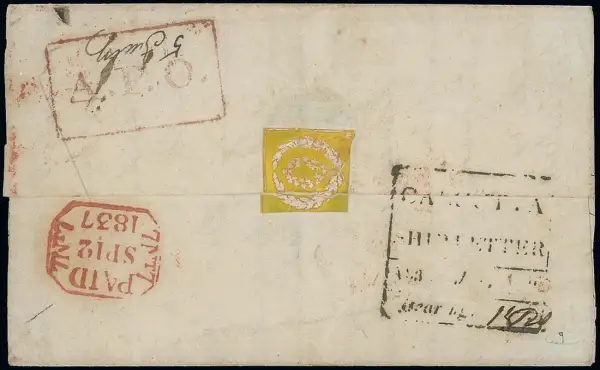
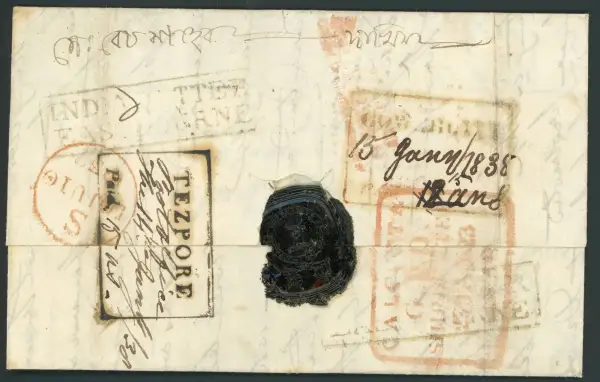
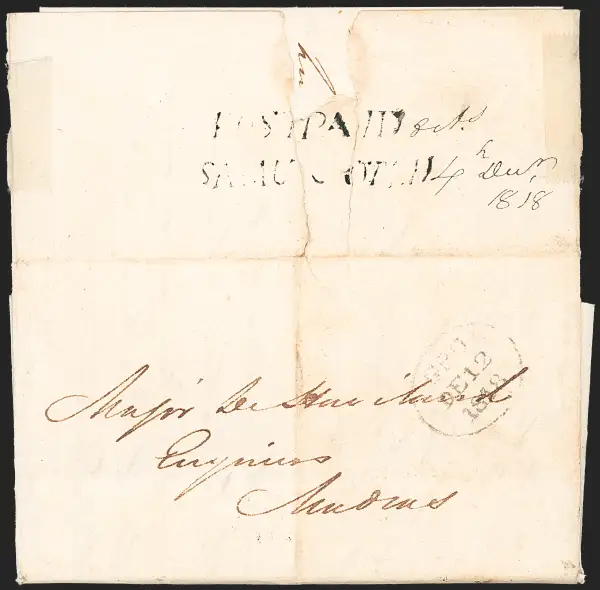
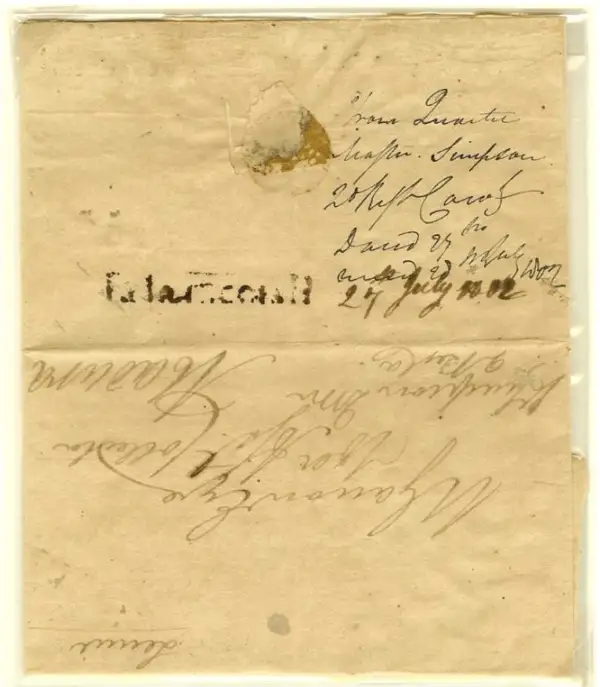
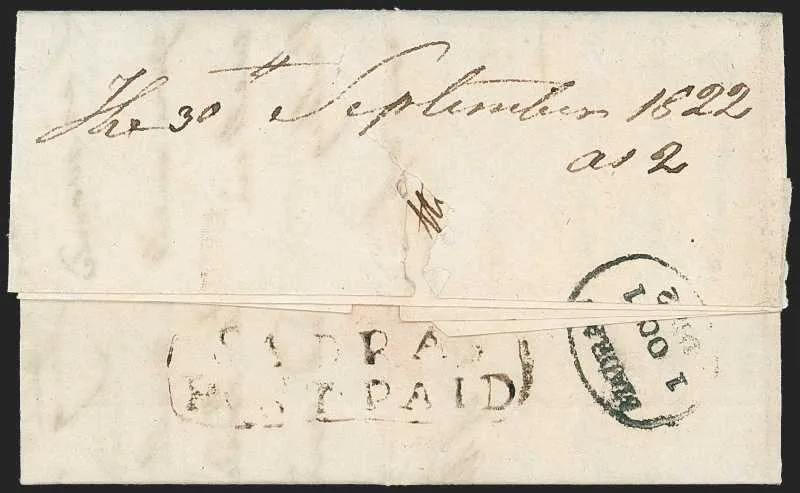
The record
Before the adhesive stamp, every letter that crossed India was marked by hand.
Circles, ovals and boxes struck in black, red and blue — the datestamps, “paid” marks and town cancels of a postal system stretching from 1773 to 1878. This census gathers them, office by office.
Browse the archive
Six presidencies
- 01
Madras
The southern peninsula — the Coromandel and Malabar coasts, the Nilgiris, and the Hyderabad and Mysore states.
603handstamps · 131 offices→ - 02
Bengal
From Fort William at Calcutta across Bengal, Bihar, Orissa and Assam — the seat of the Company's earliest organised post.
472handstamps · 101 offices→ - 03
N.W. Provinces
The ceded and conquered provinces of the upper Ganges — Agra, Delhi, Benares and the hill stations.
401handstamps · 84 offices→ - 04
Bombay
The western seaboard and Deccan — Gujarat, the Konkan, and the routes inland from Bombay harbour.
302handstamps · 64 offices→ - 05
Punjab
Annexed in 1849 — from the Cis-Sutlej hill stations to Lahore, Multan and the Peshawar frontier.
144handstamps · 33 offices→ - 06
Sindh
Conquered in 1843 — the lower Indus from Karachi through Hyderabad and Sukkur.
34handstamps · 7 offices→
From mark to cover
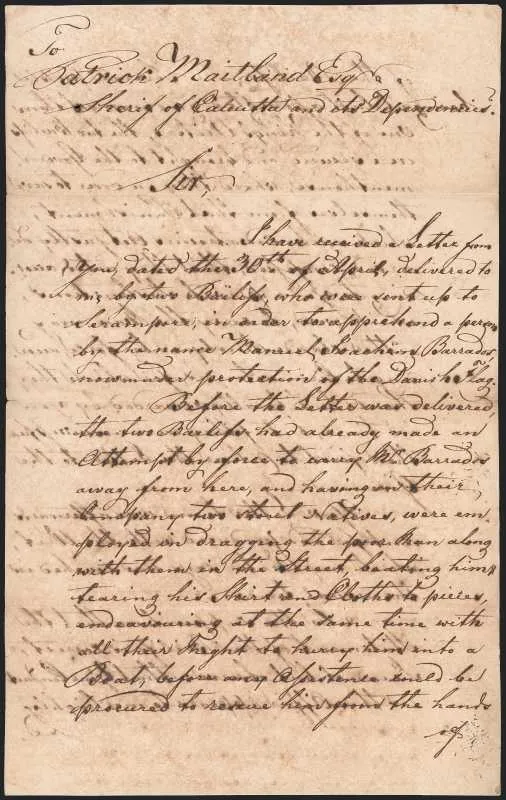
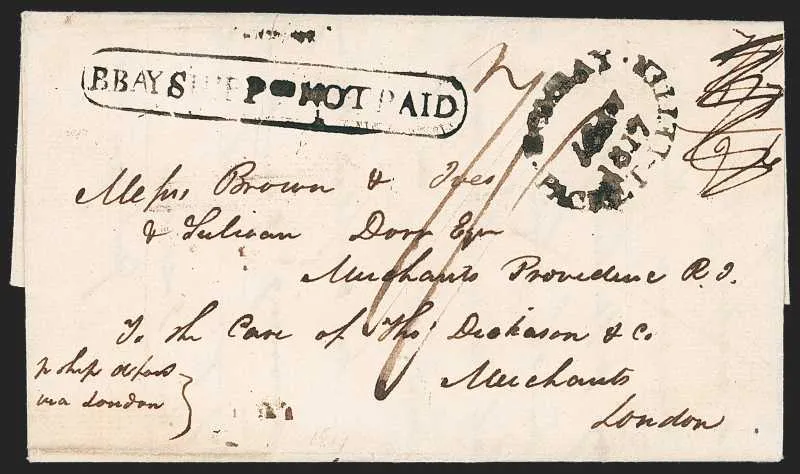
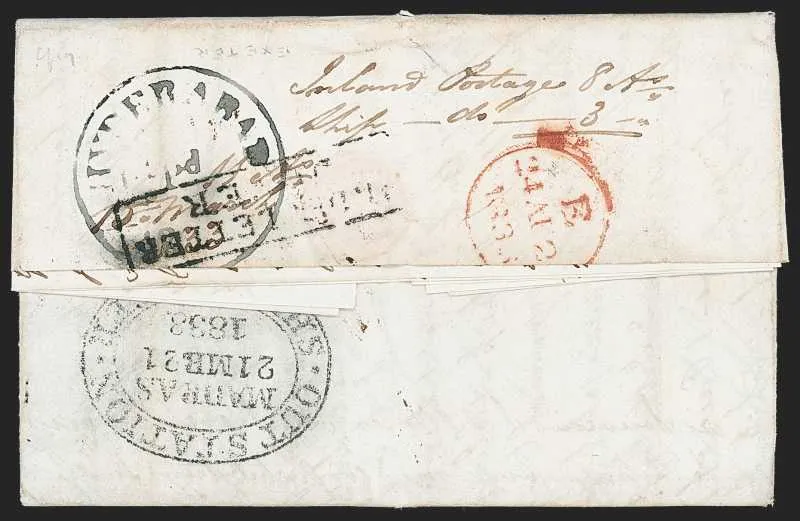
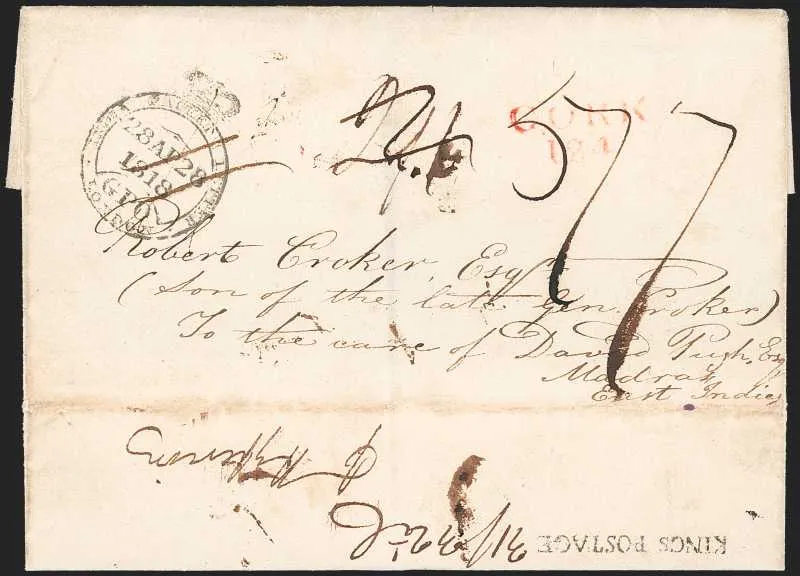
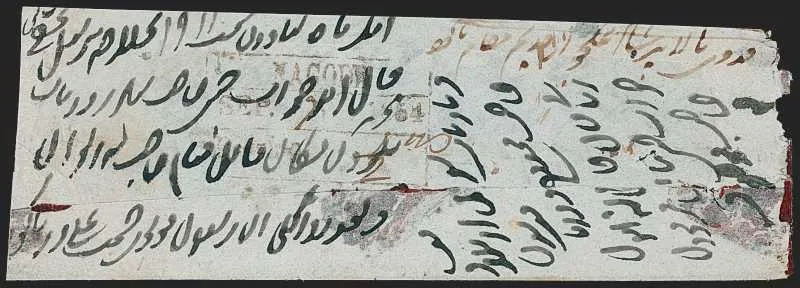
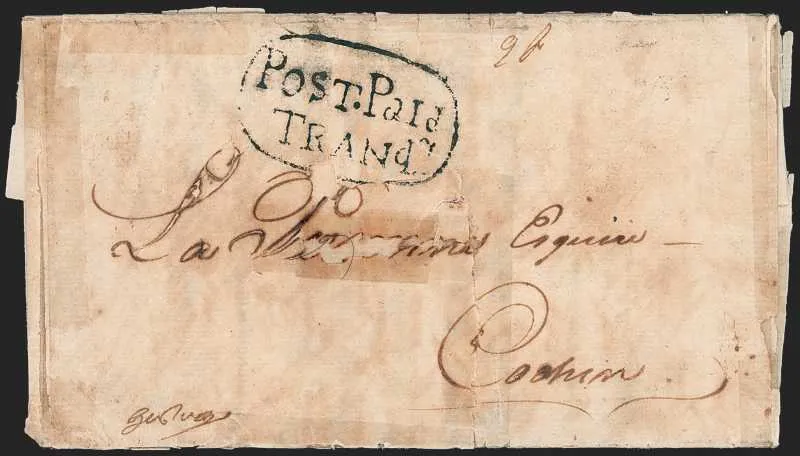
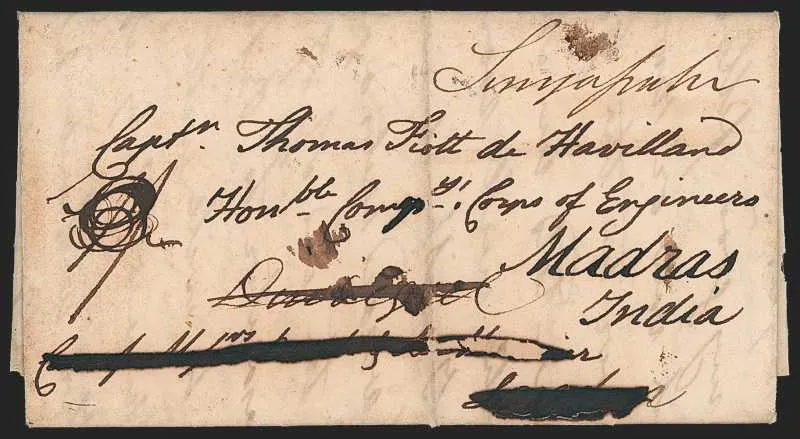
Behind every figure is a letter that travelled.
Entires and covers that carried these marks across India and the world — the rarest recorded here from collections far and wide.







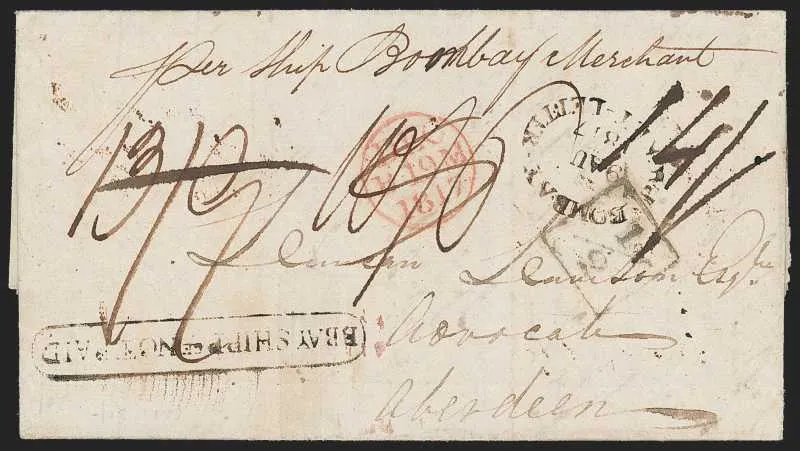


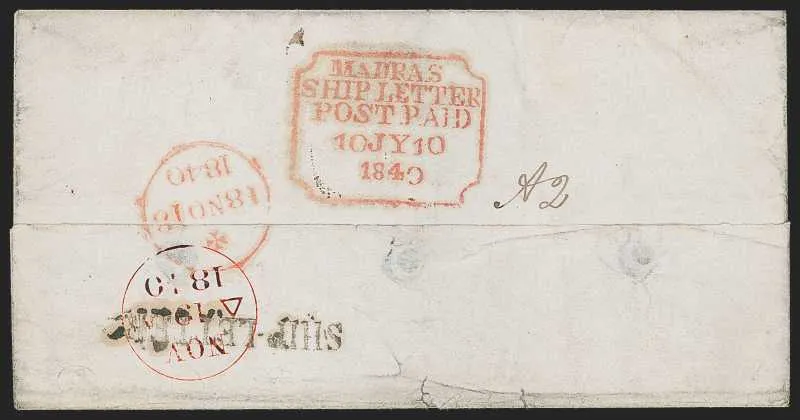


The archive
A census of the earliest postal history of India
Hand Struck Stamps of India is an open, living record of the handstruck stamps of India — the postal markings of British India struck by hand before the adhesive stamp of 1854, the pre stamp and pre philatelic era. It brings together the cancellations, datestamps, handstamps and manuscript rates found on the pre stamp covers of India — the native and inland mail of the presidencies — drawn from the Hammond Giles catalogue and the wider collecting community.
The material spans the Bengal, Bombay and Madras presidencies, the North-Western Provinces and the Punjab, from East India Company mail to the eve of the first Indian stamp. Every post office, every Giles figure and every recorded cover has a permanent page, so the postal history of early British India can be searched, cited and added to by anyone who holds a piece of it.
Frequently asked
- What are hand-struck stamps of India?
- Hand-struck stamps — also called handstamps or handstruck postal markings — are the inked postal marks applied by hand at Indian post offices before the first adhesive postage stamp of 1854. They include town datestamps, cancellations, “Bearing” and “Post Paid” marks and forwarding-agent handstamps struck across Bengal, Bombay, Madras, the North-Western Provinces and the Punjab.
- What are the pre covers of India?
- The pre covers of India — also called pre stamp, pre philatelic or pre-1854 covers — are folded letters and envelopes that travelled through the Indian post before adhesive stamps existed, so postage was recorded entirely by hand-struck marks and manuscript rates. These native and inland covers of British India are the primary evidence for early Indian postal history, and each recorded example is catalogued here as a census cover.
- Which presidencies and post offices does the census cover?
- The census covers the postal markings of British India across the Bengal, Bombay and Madras presidencies together with the North-Western Provinces and the Punjab, spanning hundreds of post offices from Agra to Yellwall. Every office has its own page listing each recorded handstamp and the covers that bear it.
- What is the Hammond Giles catalogue?
- The reference standard for this field is the work of Derek Hammond Giles, whose catalogues of the handstruck postage stamps of India assign each marking a figure number (for example HG 1). This archive follows that numbering and extends it into a living, community-verified census of surviving covers.
- How can I contribute a cover or postmark to the census?
- Collectors are welcome to submit covers and postal markings. On any handstamp page you can upload front and back images of a cover; every submission is reviewed by an editor before it is published, so the record stays accurate while it grows.
In tribute
This archive is a tribute to Hammond Giles, who gathered the impressions of countless collectors into a single catalogue — and gave the study of India’s early posts its foundation.
Photographs and rubbings came from hands across the world. What was scattered, Hammond Giles made whole. We carry that work forward here — open, searchable, and still growing.