Skip to content
Hand Struck Stamps
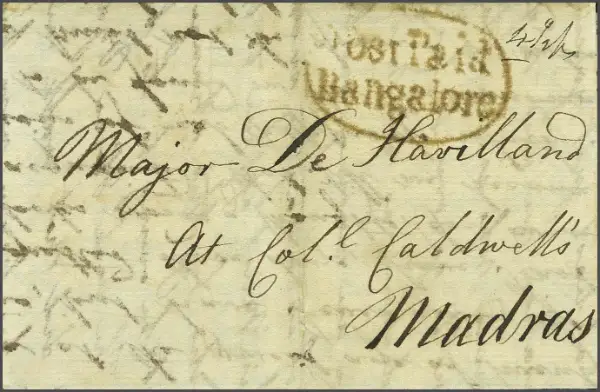
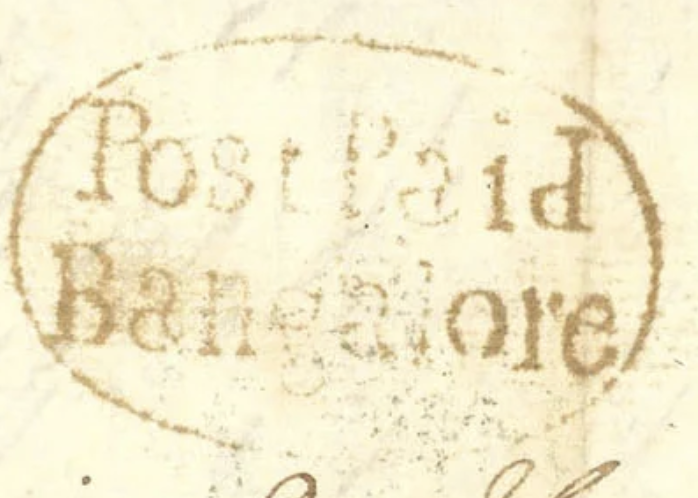
Bangalore HG 2 — pre-1854 Indian handstamp, 1803–1825, BlackBangalore HG 2 — pre-1854 Indian handstamp, 1803–1825, Black (sketch)

Madras Presidency · Pre-1854 Handstamp

Bangalore HG 2

Colours & dates
Black1803–1825
Red1815–1825
Rarity
Common
Note
October 1803
Catalogue
1989 Catalogue · p. 23
Figure
2
Submitted by
D. Hammond Giles

Census

Census records

31 covers recorded

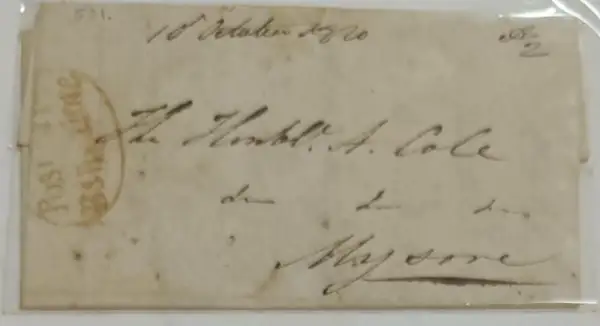
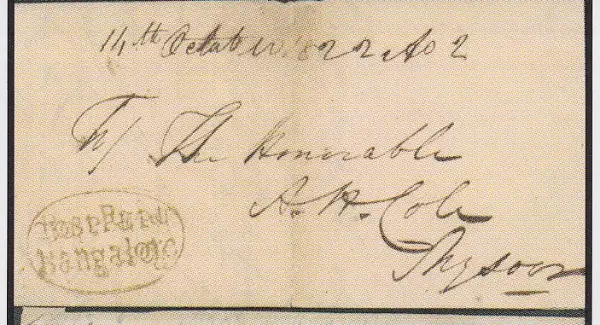
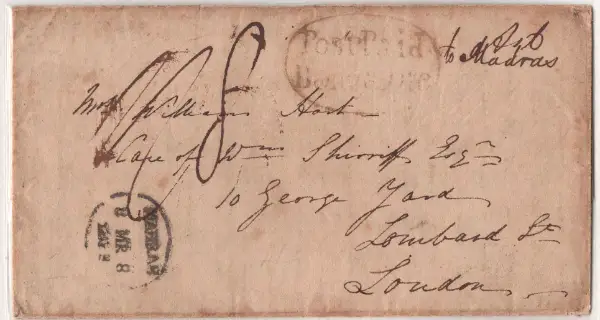
31 pre-1854 covers bearing the Bangalore HG 2 handstamp are recorded below — each entry links to images, provenance and auction details.
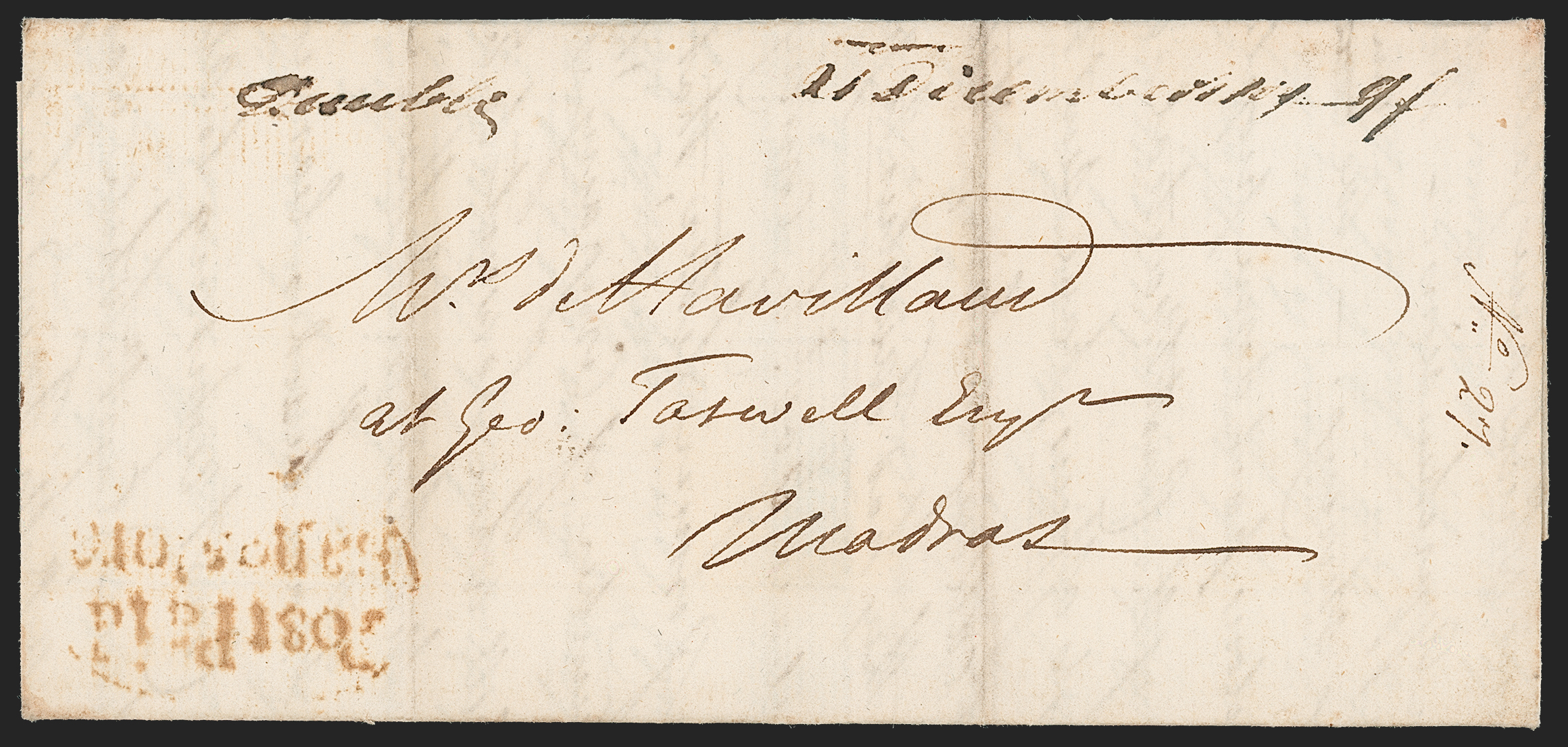
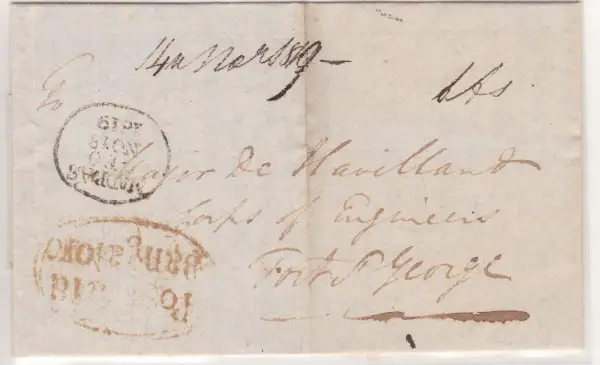
COV-3555 pre stamp cover
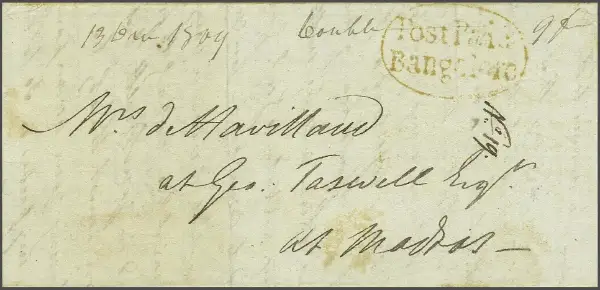
COV-3555

13 December 1809

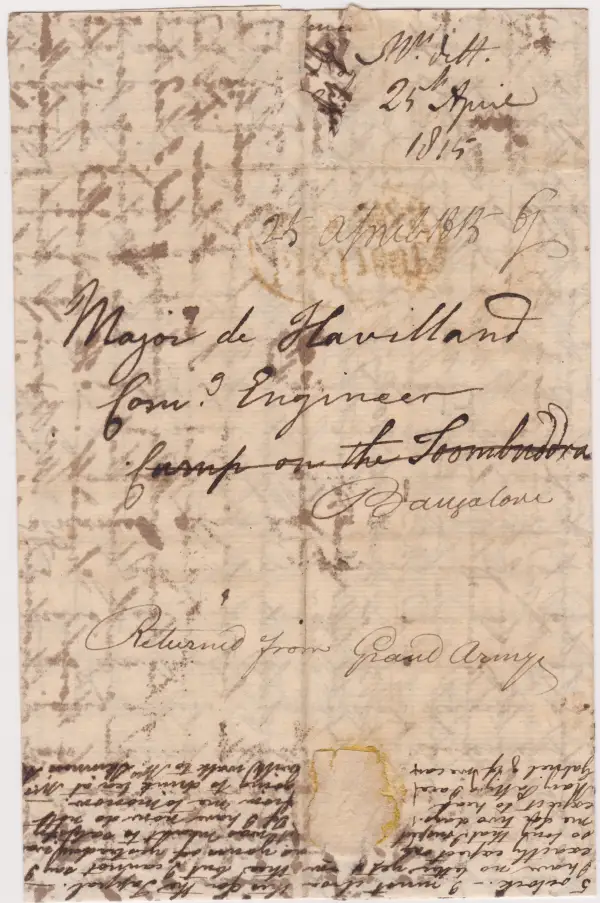
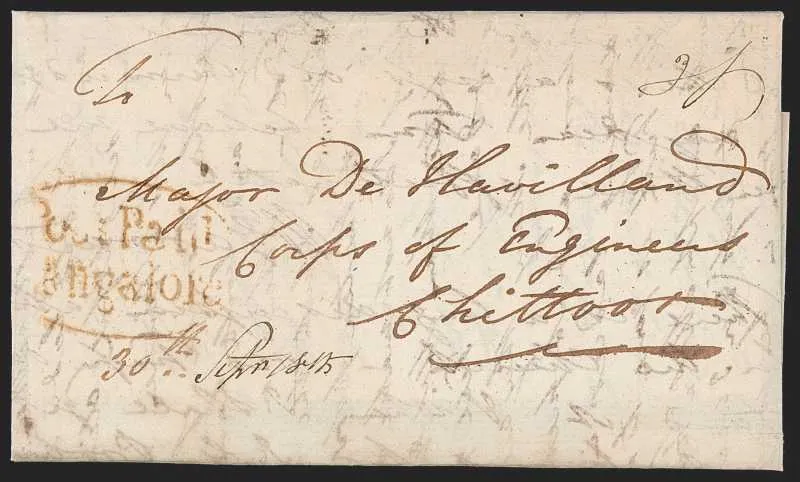
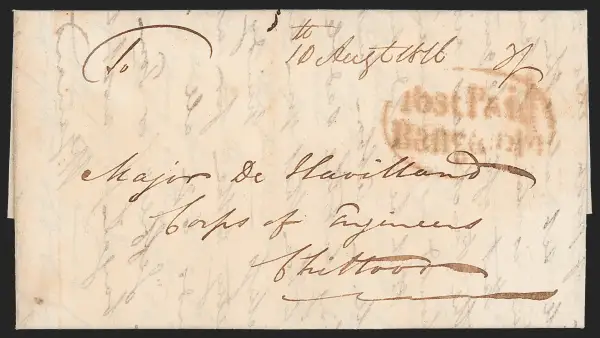
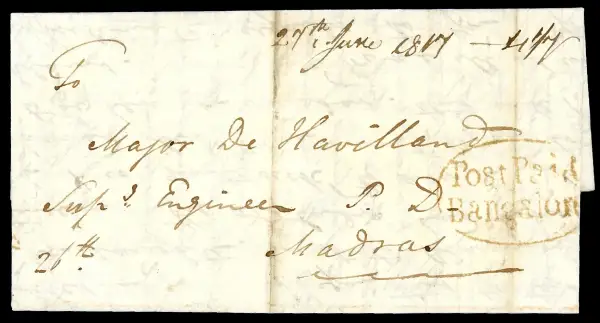
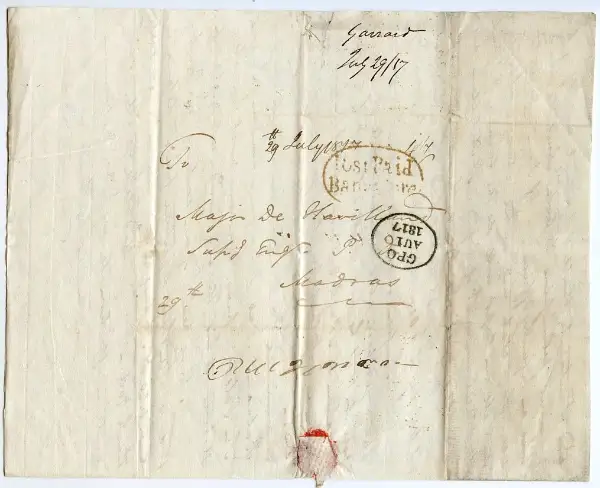
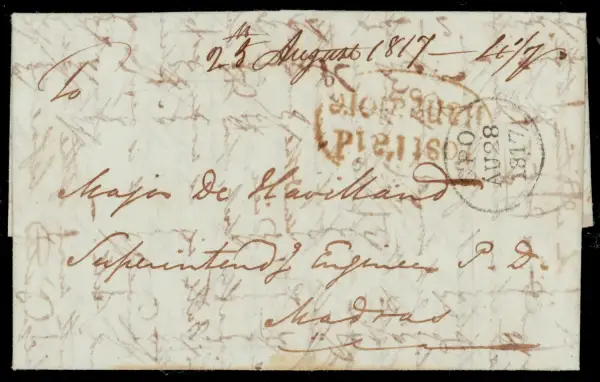
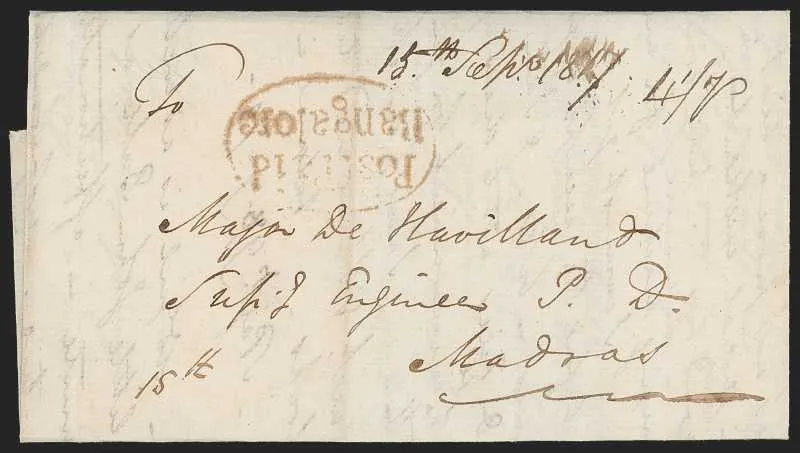
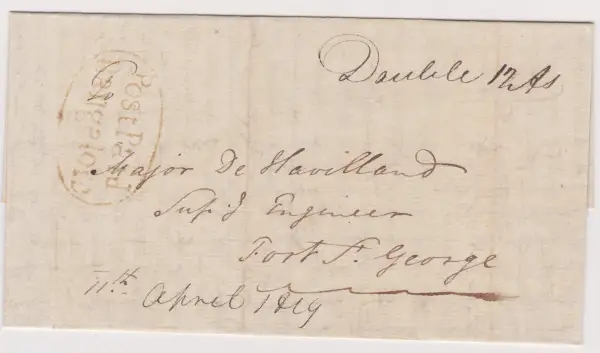
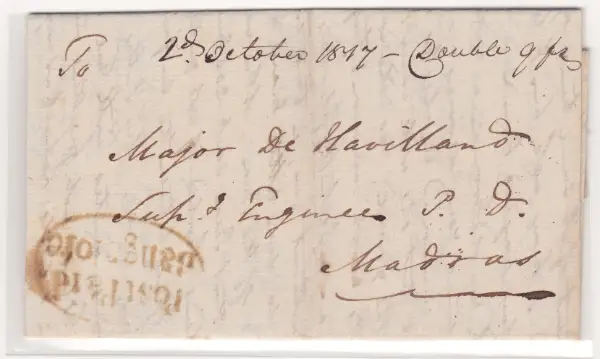
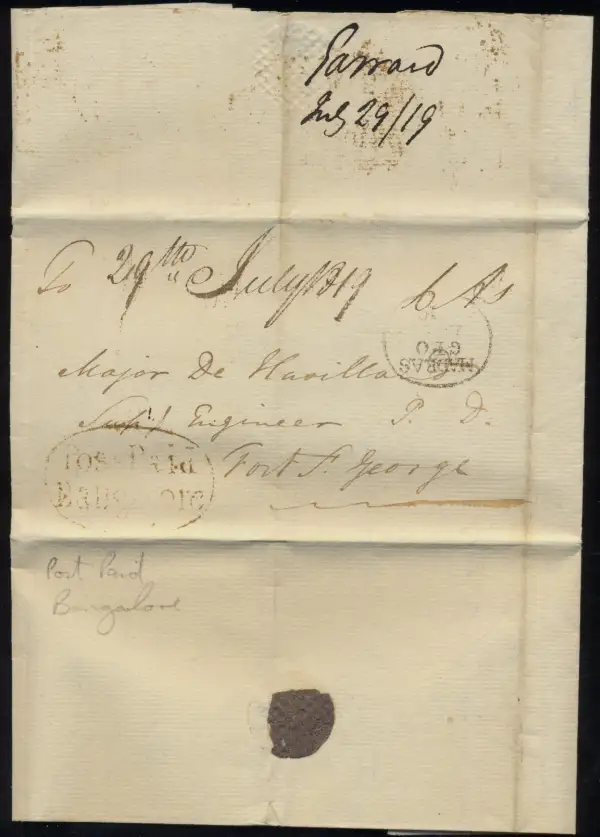
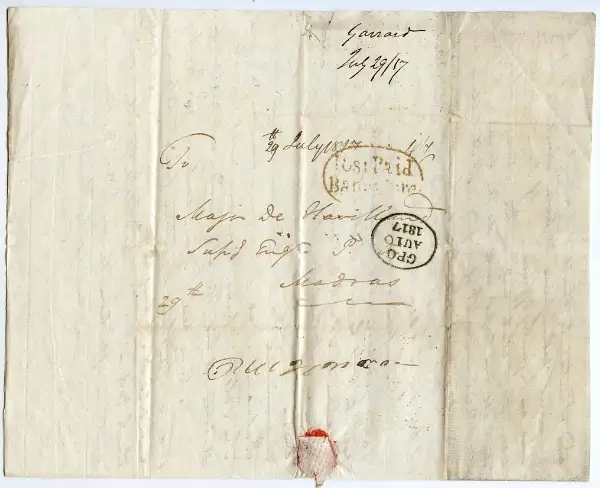
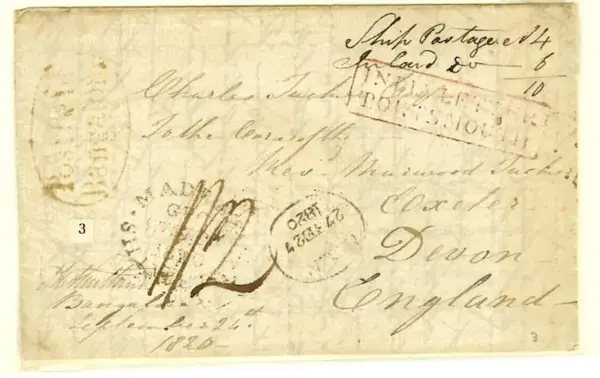
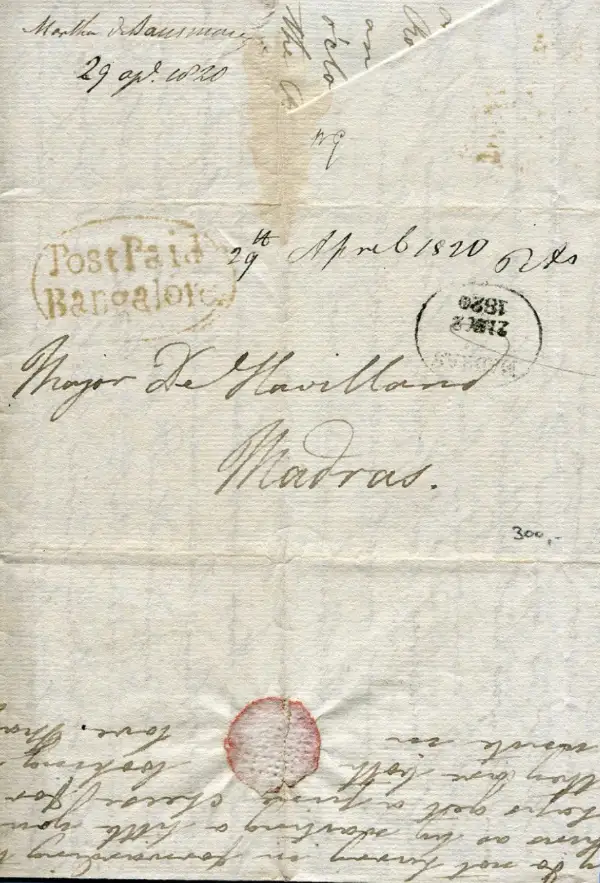
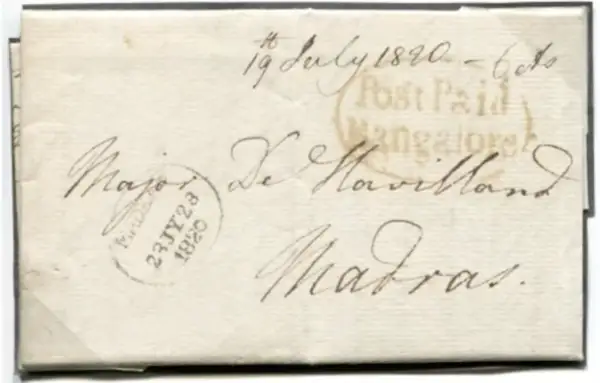
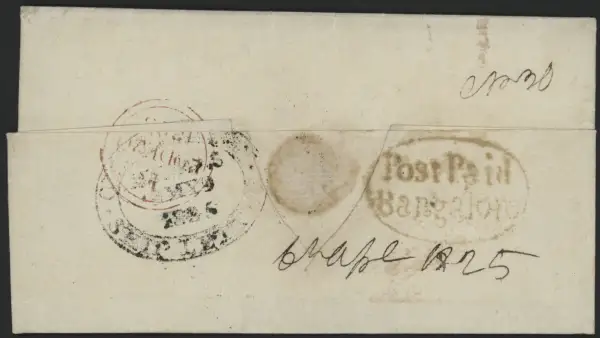
The Thomas Fiott de Havilland correspondence archive, 308 entire letters, all with full content, written or addressed to Thomas Fiott de Havilland in the period between 1809 to 1841 with emphasis on the years 1809/1810 the Seringapatam mutiny as well as those from the campaign against the Mahratas in 1815/16 in Madras (Chennai). The correspondence comprises letters, to and from his wife Elizabeth ("Eliza") de Sausmarez (1782-1818), with many written in Bangalore and Madras showing oval POST PAID BANGALORE handstamp. further a correspondence to his friend Georg Cadall, Fortress Adjutant in Seringapatam, letters to his fellow officer William Garrard (1778-1836) or James Lilliman Caldwell (1770-1863I, a leading military engineer fan future general as well as incoming mail from London or Guernsey including many ship letters with interesting contents and markings. This archive has to be regarded in general as a unique source of information about the changeful everyday life of the English in Southern India in the early 19th century. Finally it has to be pointed out, that every single letter has been completely transilterated. Thomas Fiott de Havilland (1775-1866) was born in Guernsey and joined the service of the British East India Company in 1792 and became Captain in 1806, Major in 1815 and at last Lieutenant-Colonel in 1824. In his younger days he served at the siege of Pondicherry (1793), at the conquest of Ceylon (1796) and the siege of Seringapatam (1799) where he met Arthur Wellesley, better known as Lord Wellington. Serving at Seringapatam in 1809 he participated actively in the well-known mutiny against the Governor of Madras. In consequence he was set under arrest and had to return to England to defend his case. Finally reinstalled he returned to Madras in 1814 and became one of the leading military and civil engineer, in the madras presidency and completed the Saint George's cathedral. In 1825 he retired from the service and returned to Guernsey, where he died in the age of 90.

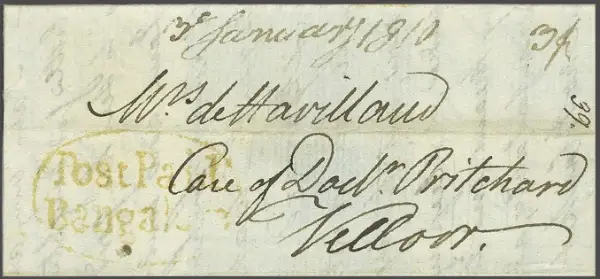
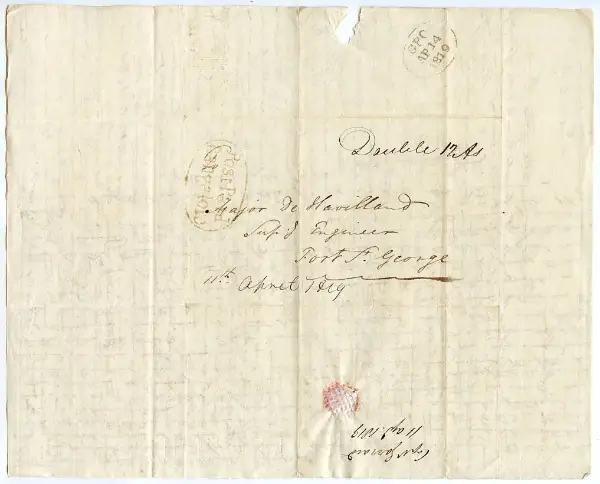
COV-3554 pre stamp cover
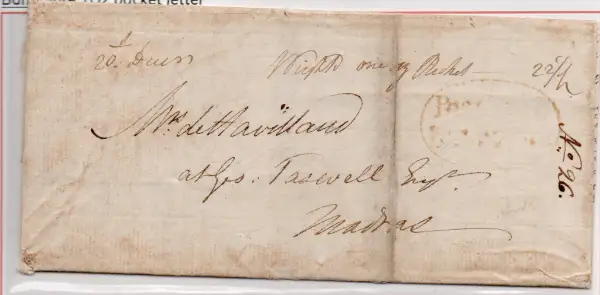
COV-3554

13 January 1810

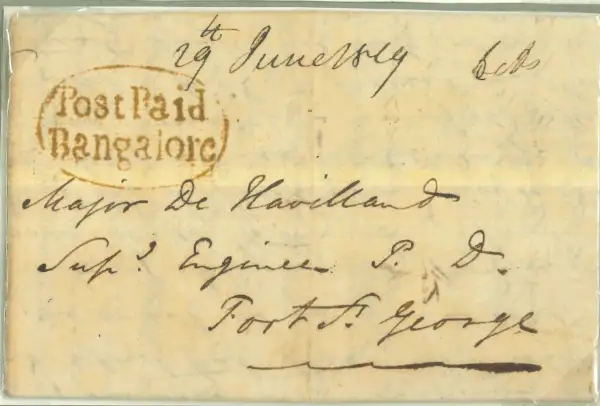
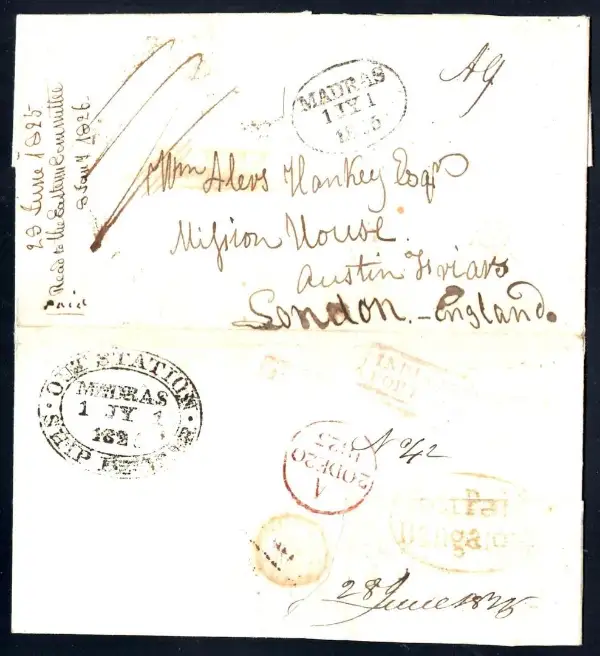
The Thomas Fiott de Havilland correspondence archive, 308 entire letters, all with full content, written or addressed to Thomas Fiott de Havilland in the period between 1809 to 1841 with emphasis on the years 1809/1810 the Seringapatam mutiny as well as those from the campaign against the Mahratas in 1815/16 in Madras (Chennai). The correspondence comprises letters, to and from his wife Elizabeth ("Eliza") de Sausmarez (1782-1818), with many written in Bangalore and Madras showing oval POST PAID BANGALORE handstamp. further a correspondence to his friend Georg Cadall, Fortress Adjutant in Seringapatam, letters to his fellow officer William Garrard (1778-1836) or James Lilliman Caldwell (1770-1863I, a leading military engineer fan future general as well as incoming mail from London or Guernsey including many ship letters with interesting contents and markings. This archive has to be regarded in general as a unique source of information about the changeful everyday life of the English in Southern India in the early 19th century. Finally it has to be pointed out, that every single letter has been completely transilterated. Thomas Fiott de Havilland (1775-1866) was born in Guernsey and joined the service of the British East India Company in 1792 and became Captain in 1806, Major in 1815 and at last Lieutenant-Colonel in 1824. In his younger days he served at the siege of Pondicherry (1793), at the conquest of Ceylon (1796) and the siege of Seringapatam (1799) where he met Arthur Wellesley, better known as Lord Wellington. Serving at Seringapatam in 1809 he participated actively in the well-known mutiny against the Governor of Madras. In consequence he was set under arrest and had to return to England to defend his case. Finally reinstalled he returned to Madras in 1814 and became one of the leading military and civil engineer, in the madras presidency and completed the Saint George's cathedral. In 1825 he retired from the service and returned to Guernsey, where he died in the age of 90.

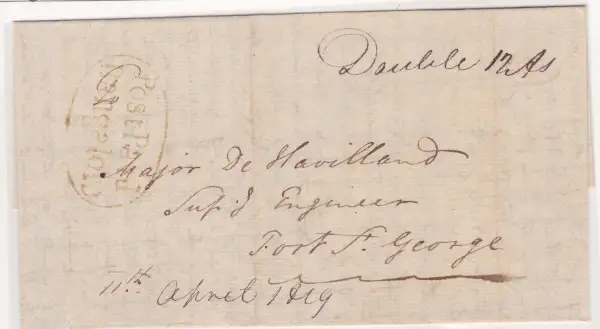
COV-3552 pre stamp cover
COV-3552

1 August 1818

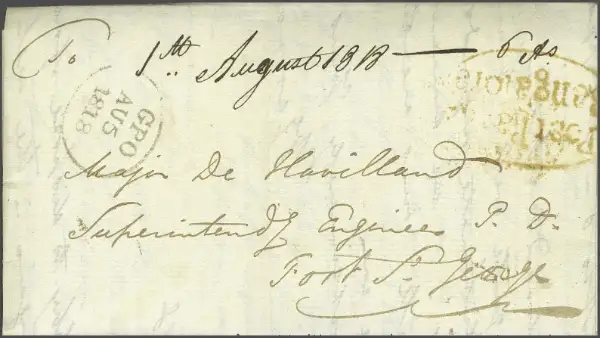
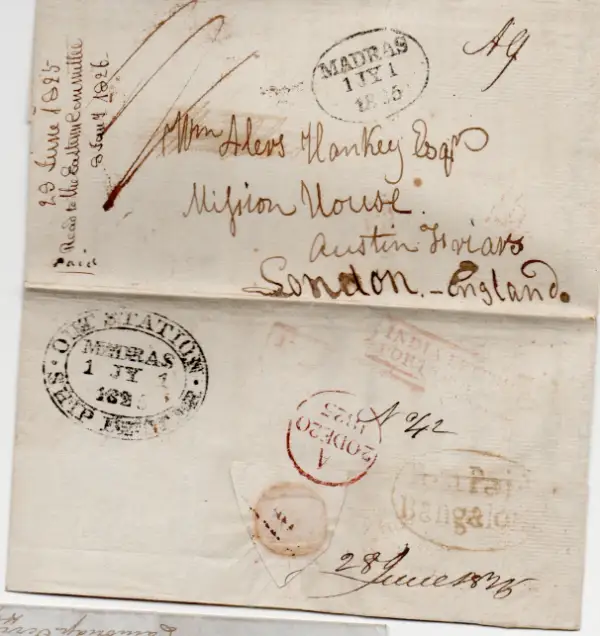
The Thomas Fiott de Havilland correspondence archive, 308 entire letters, all with full content, written or addressed to Thomas Fiott de Havilland in the period between 1809 to 1841 with emphasis on the years 1809/1810 the Seringapatam mutiny as well as those from the campaign against the Mahratas in 1815/16 in Madras (Chennai). The correspondence comprises letters, to and from his wife Elizabeth ("Eliza") de Sausmarez (1782-1818), with many written in Bangalore and Madras showing oval POST PAID BANGALORE handstamp. further a correspondence to his friend Georg Cadall, Fortress Adjutant in Seringapatam, letters to his fellow officer William Garrard (1778-1836) or James Lilliman Caldwell (1770-1863I, a leading military engineer fan future general as well as incoming mail from London or Guernsey including many ship letters with interesting contents and markings. This archive has to be regarded in general as a unique source of information about the changeful everyday life of the English in Southern India in the early 19th century. Finally it has to be pointed out, that every single letter has been completely transilterated. Thomas Fiott de Havilland (1775-1866) was born in Guernsey and joined the service of the British East India Company in 1792 and became Captain in 1806, Major in 1815 and at last Lieutenant-Colonel in 1824. In his younger days he served at the siege of Pondicherry (1793), at the conquest of Ceylon (1796) and the siege of Seringapatam (1799) where he met Arthur Wellesley, better known as Lord Wellington. Serving at Seringapatam in 1809 he participated actively in the well-known mutiny against the Governor of Madras. In consequence he was set under arrest and had to return to England to defend his case. Finally reinstalled he returned to Madras in 1814 and became one of the leading military and civil engineer, in the madras presidency and completed the Saint George's cathedral. In 1825 he retired from the service and returned to Guernsey, where he died in the age of 90.

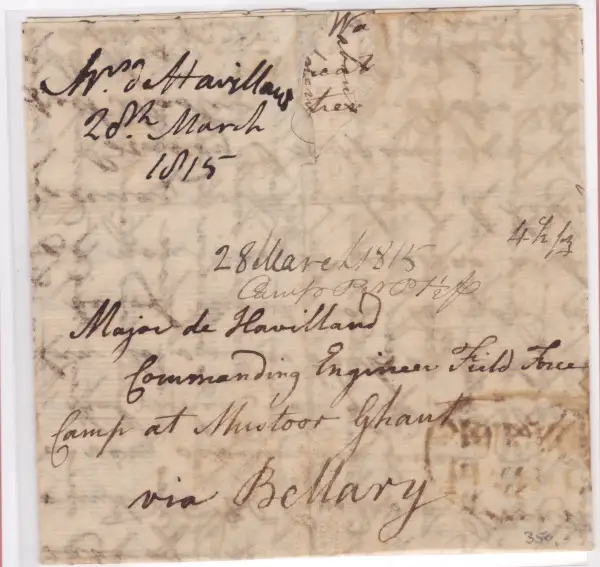
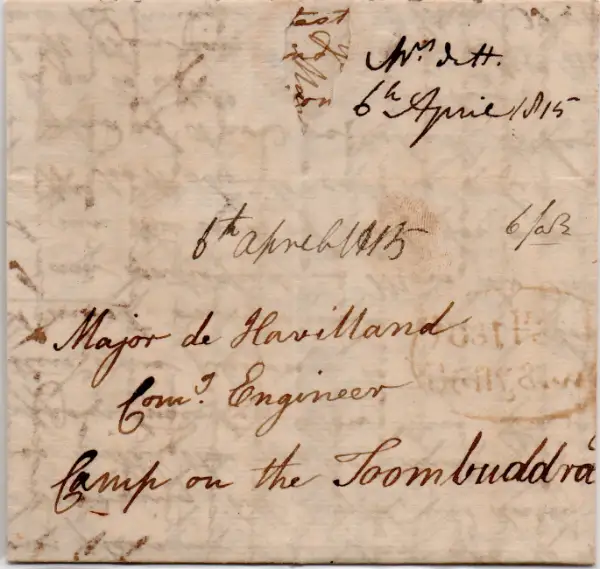
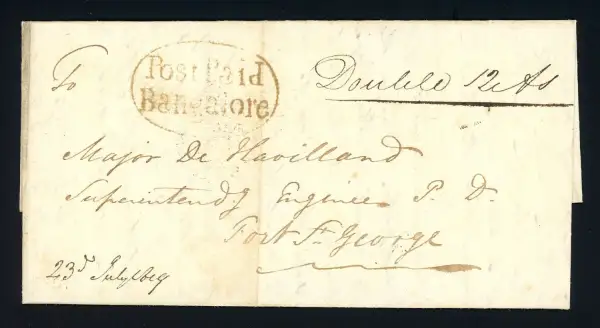
COV-3551 pre stamp cover
COV-3551

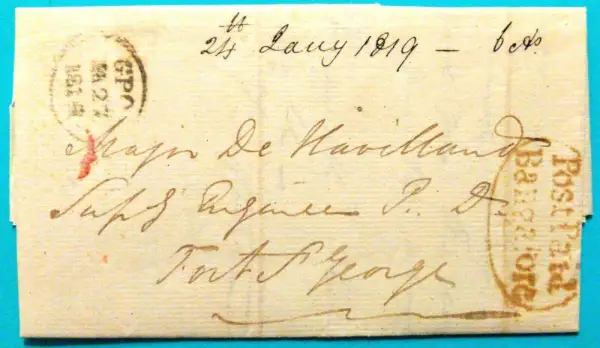
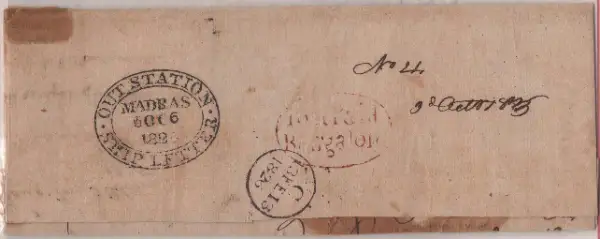
The Thomas Fiott de Havilland correspondence archive, 308 entire letters, all with full content, written or addressed to Thomas Fiott de Havilland in the period between 1809 to 1841 with emphasis on the years 1809/1810 the Seringapatam mutiny as well as those from the campaign against the Mahratas in 1815/16 in Madras (Chennai). The correspondence comprises letters, to and from his wife Elizabeth ("Eliza") de Sausmarez (1782-1818), with many written in Bangalore and Madras showing oval POST PAID BANGALORE handstamp. further a correspondence to his friend Georg Cadall, Fortress Adjutant in Seringapatam, letters to his fellow officer William Garrard (1778-1836) or James Lilliman Caldwell (1770-1863I, a leading military engineer fan future general as well as incoming mail from London or Guernsey including many ship letters with interesting contents and markings. This archive has to be regarded in general as a unique source of information about the changeful everyday life of the English in Southern India in the early 19th century. Finally it has to be pointed out, that every single letter has been completely transilterated. Thomas Fiott de Havilland (1775-1866) was born in Guernsey and joined the service of the British East India Company in 1792 and became Captain in 1806, Major in 1815 and at last Lieutenant-Colonel in 1824. In his younger days he served at the siege of Pondicherry (1793), at the conquest of Ceylon (1796) and the siege of Seringapatam (1799) where he met Arthur Wellesley, better known as Lord Wellington. Serving at Seringapatam in 1809 he participated actively in the well-known mutiny against the Governor of Madras. In consequence he was set under arrest and had to return to England to defend his case. Finally reinstalled he returned to Madras in 1814 and became one of the leading military and civil engineer, in the madras presidency and completed the Saint George's cathedral. In 1825 he retired from the service and returned to Guernsey, where he died in the age of 90.

Compare HG 2 across every office →

Submit a cover

Have a cover from Bangalore HG 2?

Front (and back) image required. It is reviewed before publication — nothing appears immediately.

Images * — front & back (0/3)
Auction house (optional)

Type to search registered auction houses

About this mark

The Bangalore HG 2 handstamp

Bangalore City, the seat of government of the Mysore State, and headquarters of the Bangalore Brigade of the Indian Army, situated 12°58' N, and 77°35' E, 219 miles from Madras, and 692 miles from Bombay. The fort, first constructed of mud, was enlarged and built in stone by Haider Ali in 1761, captured by the British in 1791, subsequently dismantled by Tipu Sultan, but restored in 1799.

Bangalore HG 2 is a pre-1854 handstruck postal marking of the post office at Bangalore — the present-day Bengaluru — in the Madras Presidency, British India, in recorded use from 1803 to 1825. Known strikes occur in black and red. It is listed in 1989 Catalogue, where each marking of British India is assigned a figure number — hence "HG 2".

31 surviving covers bearing this mark are recorded in the census, each with images and provenance. On the strength of that count the mark is graded "Common" — the grade moves automatically as new covers are recorded. Collectors searching for bangalore pre stamp covers, bangalore postal history or "Bangalore HG2" material can compare HG 2 across every office or browse the rest of the Bangalore marks.

October 1803

Frequently asked

What is the Bangalore HG 2 handstamp?
Bangalore HG 2 is a pre-1854 handstruck postal marking of Bangalore (modern Bengaluru) in the Madras Presidency, British India, in recorded use from 1803 to 1825. The "HG 2" designation is its figure number in the Hammond Giles catalogue of the handstruck postage stamps of India. Known strikes occur in black and red.
How rare is Bangalore HG 2?
Bangalore HG 2 is graded "Common" in this census. Rarity here is evidence-based: it is derived from the number of surviving covers actually recorded, not estimated. 31 surviving covers bearing this mark are recorded in the census, each with images and provenance.
What does a Bangalore pre stamp cover with HG 2 look like?
A pre stamp (pre philatelic) cover from Bangalore is a folded letter or envelope carried before India's first adhesive stamp of 1854, with postage shown entirely by hand-struck marks like HG 2. 31 surviving covers bearing this mark are recorded in the census, each with images and provenance. Each census record on this page links to full cover images, dates and auction provenance.
How do I identify or submit a Bangalore HG 2 cover?
Compare your cover against the reference impression and recorded examples on this page — check the mark's shape, colour and date range (1803–1825). If your cover is not already recorded, you can submit front and back photographs through the census form on this page; every submission is editor-reviewed before publication.

Same office

Other recorded marks at Bangalore

18 marks

18 other pre-1854 postal markings of Bangalore are recorded in the census. Compare their figure numbers, dates and colours to identify the mark on your cover.

View all Bangalore marks and postal history →

Suggest a correction

Spotted a wrong date, colour or rarity? Propose a change — every suggestion is reviewed before it is applied.

Also searched as: Bangalore HG 2, Bangalore HG2, Bangalore Giles 2, Bengaluru postal history, Bangalore handstamp, Bangalore pre stamp cover.

How to cite

Bangalore HG 2handstamp,” Hand Struck Stamps, https://handstruckstampsindia.com/madras/bangalore/hg-2 (accessed 10 August 2026).

Updated: 10 Aug 2026