
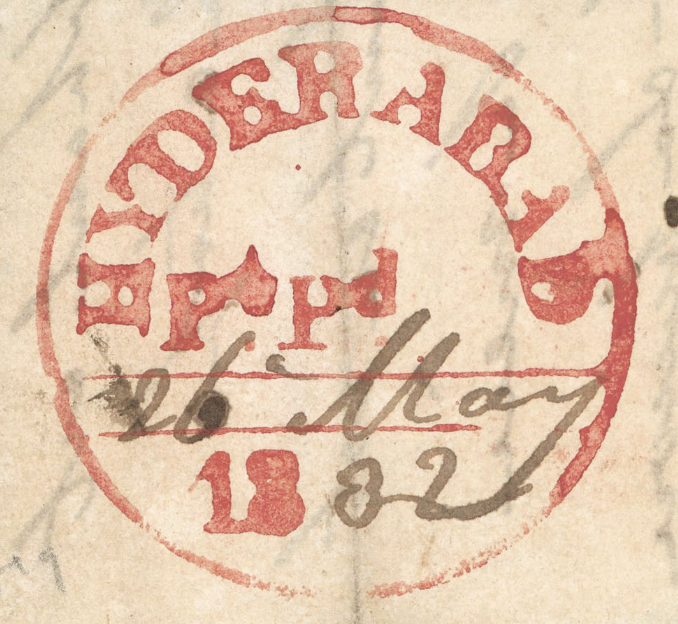

Madras Presidency · Pre-1854 Handstamp
Hyderabad HG 4
- Colours & dates
- Black1832–1837Red1832–1837
- Rarity
- Common
- Catalogue
- 1989 Catalogue · p. 104
- Figure
- 4
- Submitted by
- D. Hammond Giles
Census
Census records
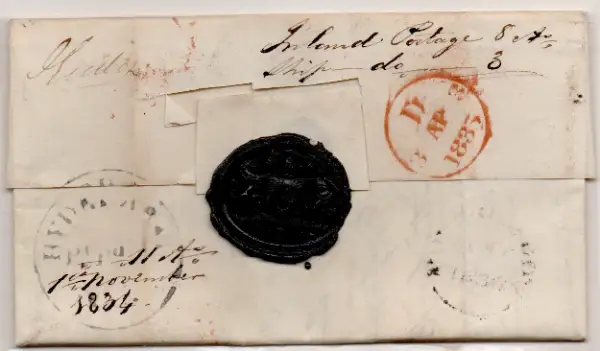
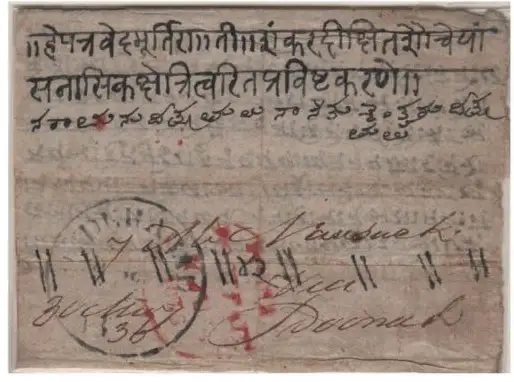
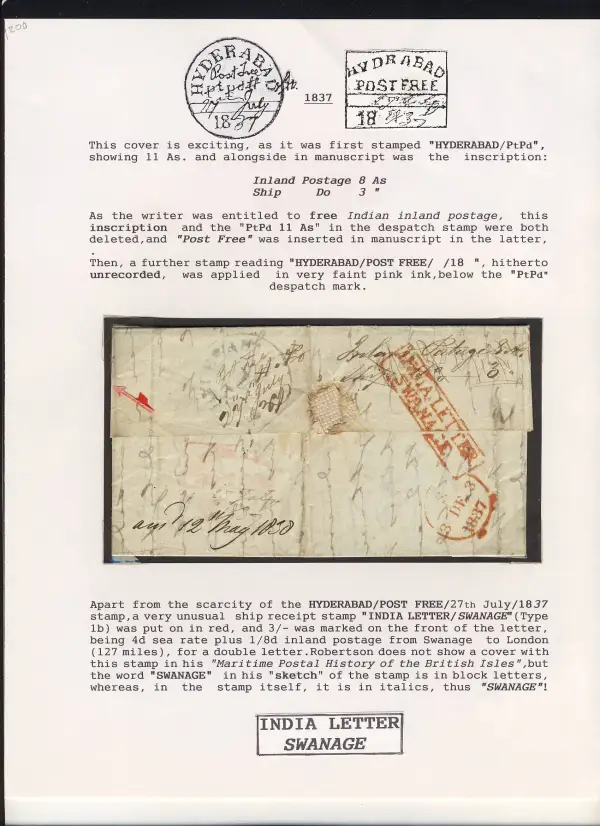
10 covers recorded10 pre-1854 covers bearing the Hyderabad HG 4 handstamp are recorded below — each entry links to images, provenance and auction details.
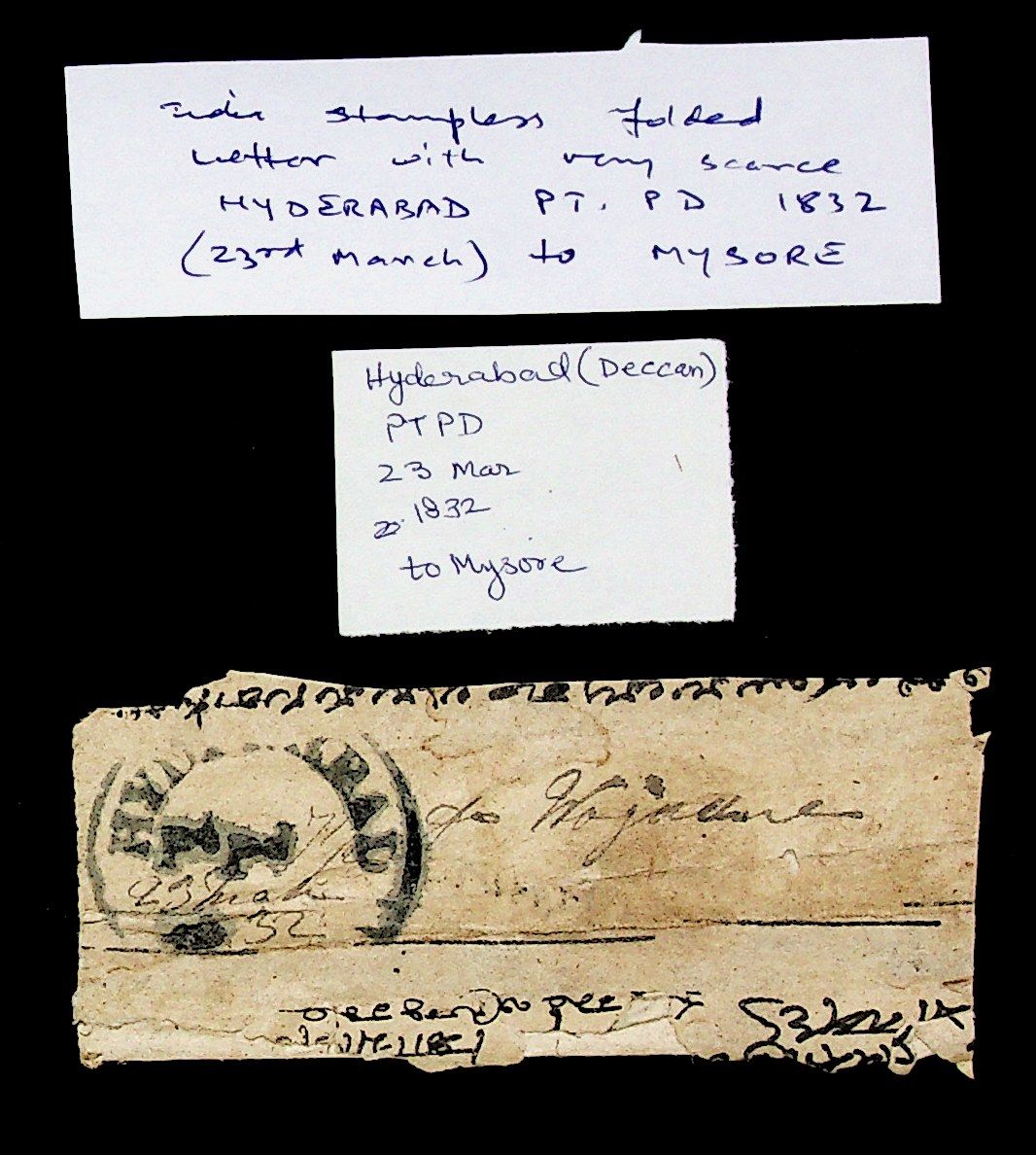
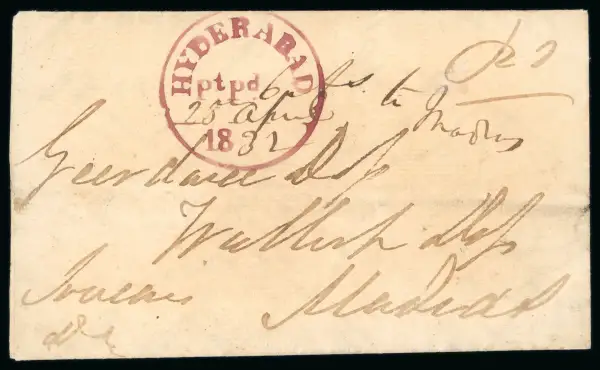
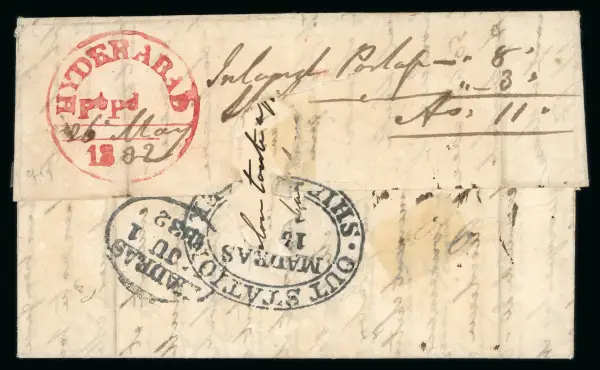
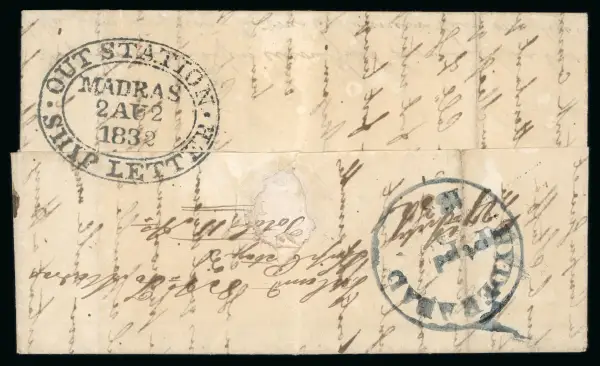
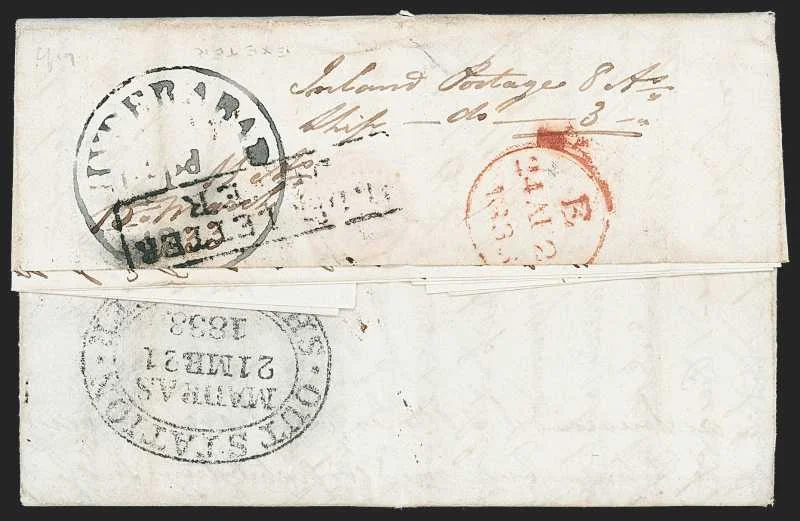
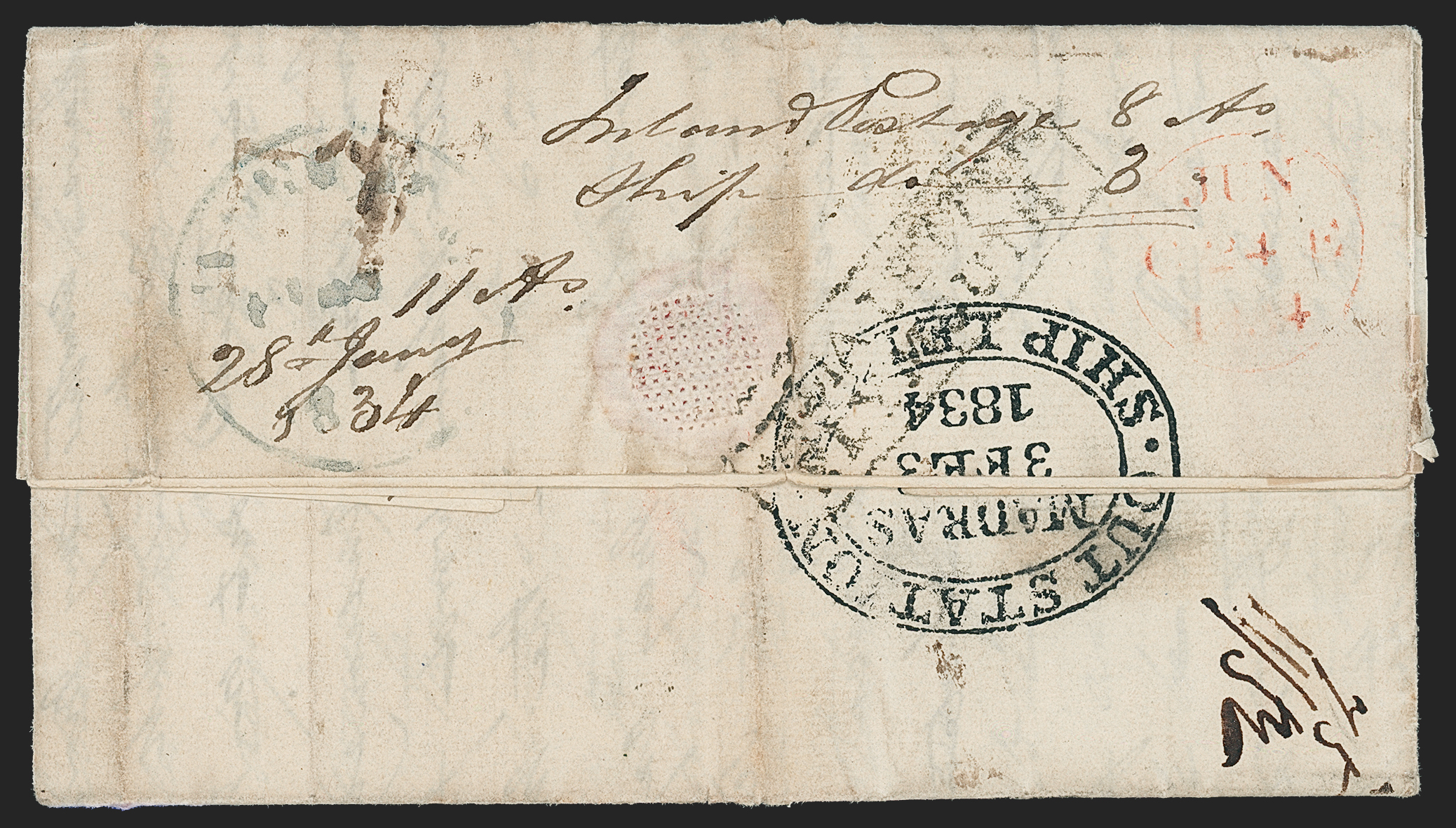
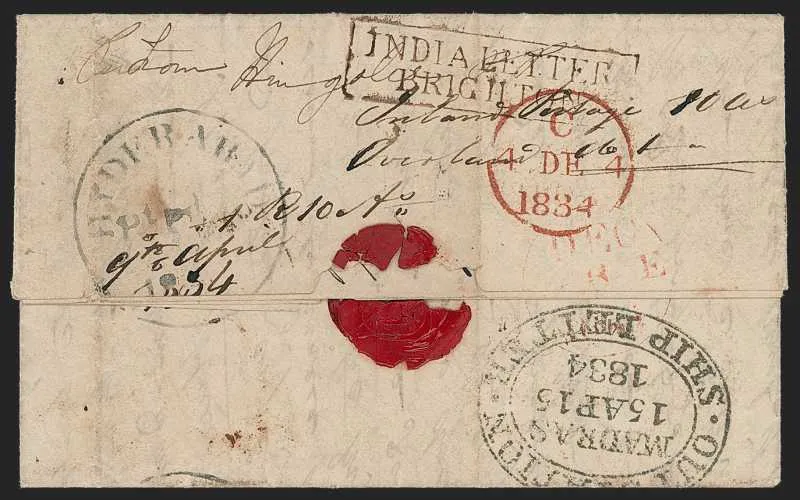
About this mark
The Hyderabad HG 4 handstamp
Hyderabad, Capital of Hyderabad State, or the Nizam's Dominions, is situated 17°22' N and 78°27' E, on the right bank of the Musi River. The house of the Nizams was founded by Asaf Jah, a distinguished general of Aurungzeb, in 1713, when he became the viceroy of the Deccan. A treaty was signed in 1768 between the Nizam and the East India Company for both an offensive and defensive alliance.
Hyderabad HG 4 is a pre-1854 handstruck postal marking of the post office at Hyderabad in the Madras Presidency, British India, in recorded use from 1832 to 1837. Known strikes occur in black and red. It is listed in 1989 Catalogue, where each marking of British India is assigned a figure number — hence "HG 4".
10 surviving covers bearing this mark are recorded in the census, each with images and provenance. On the strength of that count the mark is graded "Common" — the grade moves automatically as new covers are recorded. Collectors searching for hyderabad pre stamp covers, hyderabad postal history or "Hyderabad HG4" material can compare HG 4 across every office or browse the rest of the Hyderabad marks.
Frequently asked
- What is the Hyderabad HG 4 handstamp?
- Hyderabad HG 4 is a pre-1854 handstruck postal marking of Hyderabad in the Madras Presidency, British India, in recorded use from 1832 to 1837. The "HG 4" designation is its figure number in the Hammond Giles catalogue of the handstruck postage stamps of India. Known strikes occur in black and red.
- How rare is Hyderabad HG 4?
- Hyderabad HG 4 is graded "Common" in this census. Rarity here is evidence-based: it is derived from the number of surviving covers actually recorded, not estimated. 10 surviving covers bearing this mark are recorded in the census, each with images and provenance.
- What does a Hyderabad pre stamp cover with HG 4 look like?
- A pre stamp (pre philatelic) cover from Hyderabad is a folded letter or envelope carried before India's first adhesive stamp of 1854, with postage shown entirely by hand-struck marks like HG 4. 10 surviving covers bearing this mark are recorded in the census, each with images and provenance. Each census record on this page links to full cover images, dates and auction provenance.
- How do I identify or submit a Hyderabad HG 4 cover?
- Compare your cover against the reference impression and recorded examples on this page — check the mark's shape, colour and date range (1832–1837). If your cover is not already recorded, you can submit front and back photographs through the census form on this page; every submission is editor-reviewed before publication.
Same office
Other recorded marks at Hyderabad
10 marks10 other pre-1854 postal markings of Hyderabad are recorded in the census. Compare their figure numbers, dates and colours to identify the mark on your cover.
- Hyderabad HG 1handstampBlack1810–1819
- Hyderabad HG 2handstampBlack1817-19
- Hyderabad HG 3handstampBlack1820–1837
- Hyderabad HG 5handstampBlack1836-37
- Hyderabad HG 6handstampBlack1834–1837
- Hyderabad HG 7handstampRed1839-58
- Hyderabad HG 8handstampBlack1847-53
- Hyderabad HG 9handstampRed1853-56
- Hyderabad HG 10handstampRed1842–1856
- Hyderabad HG 11handstampRed1850–1856
Suggest a correction
Spotted a wrong date, colour or rarity? Propose a change — every suggestion is reviewed before it is applied.
Also searched as: Hyderabad HG 4, Hyderabad HG4, Hyderabad Giles 4, Hyderabad handstamp, Hyderabad pre stamp cover.
How to cite
“Hyderabad HG 4 — handstamp,” Hand Struck Stamps, https://handstruckstampsindia.com/madras/hyderabad/hg-4 (accessed 24 September 2026).
Updated: 24 Sept 2026