
Forwarding Agent
ChinooPostal Covers & Forwarding Agent Marks
- Marks
- 1
- Covers
- 7
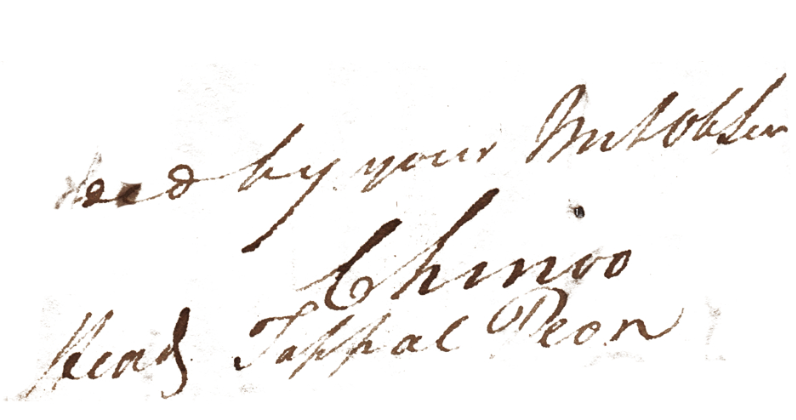
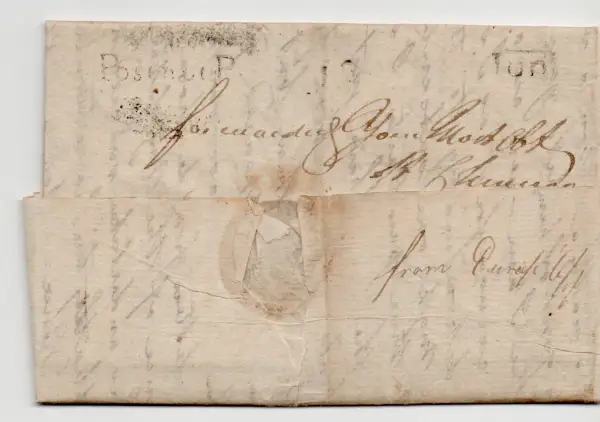
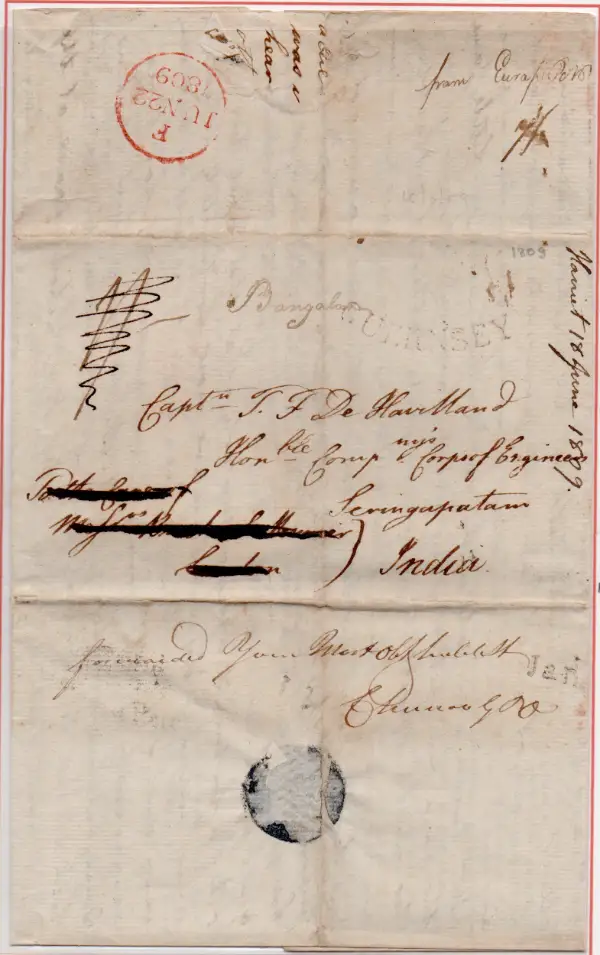
All the covers forwarded by Chinno would have a manuscript on the post indicating he has forwarded the post to the residence. In this case, as written in manuscript, "forwarded by your most obedient Chinno Head Tappal Peon". He is the only known native Indian Tappal Peon known for forwarding posts. Chinoo — recorded on the covers in manuscript as “Chinno” — belongs to a rarely documented layer of the pre-1854 postal world: the Indian tappal (dak) establishment whose runners and peons physically carried and forwarded the mails. Where European forwarding agents used printed or handstruck cachets, a tappal peon’s part survives only in a manuscript endorsement, which makes a named individual an unusually personal record. On present evidence he is the only native Indian tappal peon noted in this census as a forwarding hand, and every cover carrying his endorsement is a scarce trace of the people, rather than the offices, who moved the mails.
Census
Census records
7 covers recorded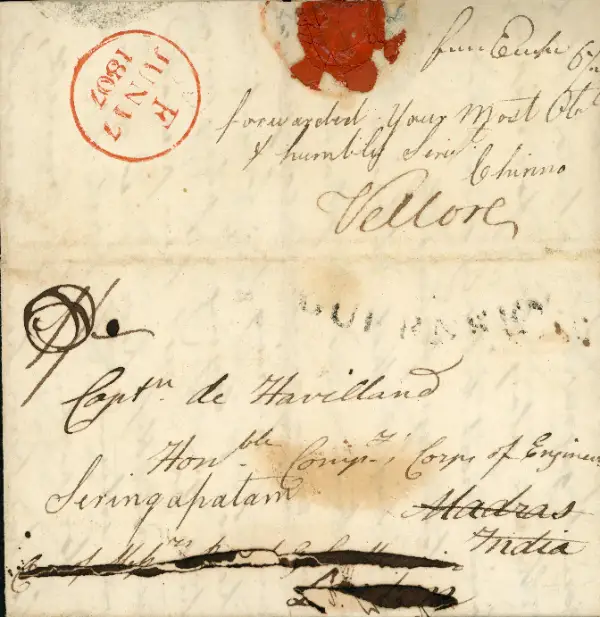
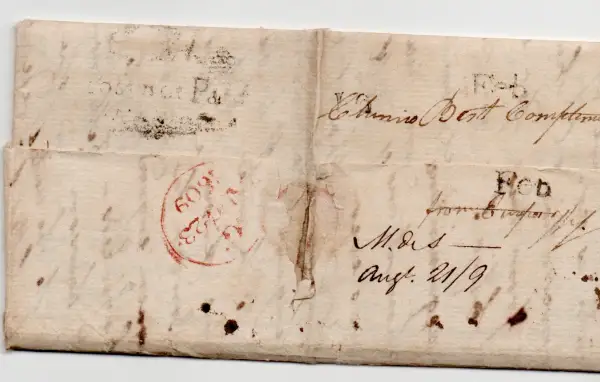
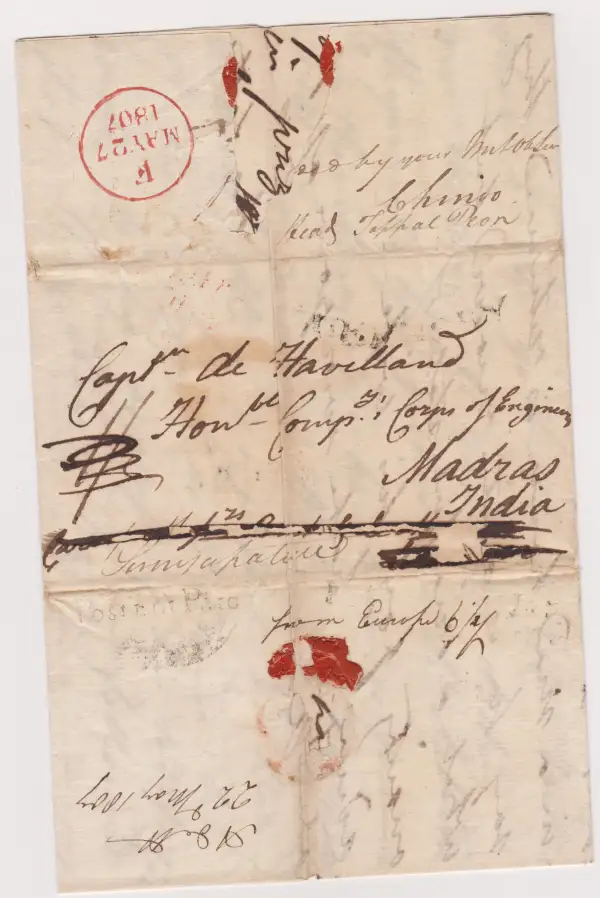
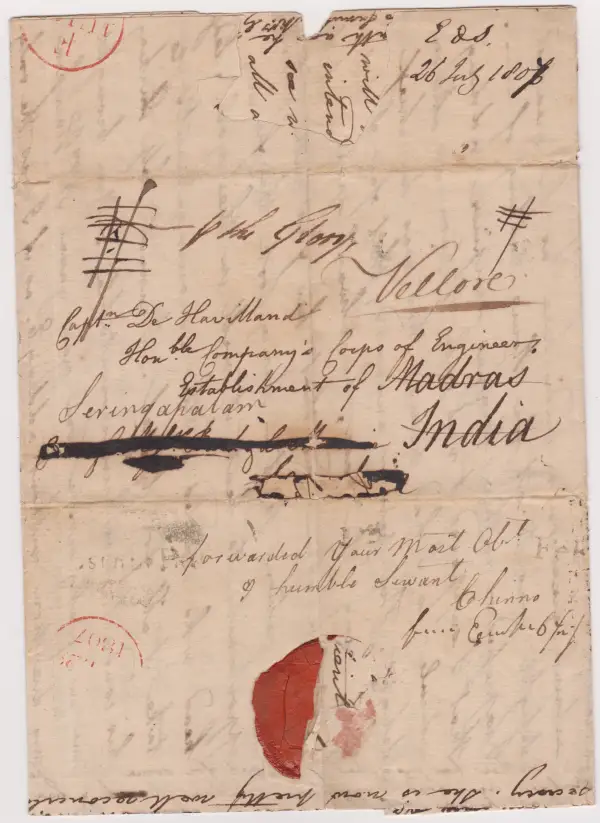
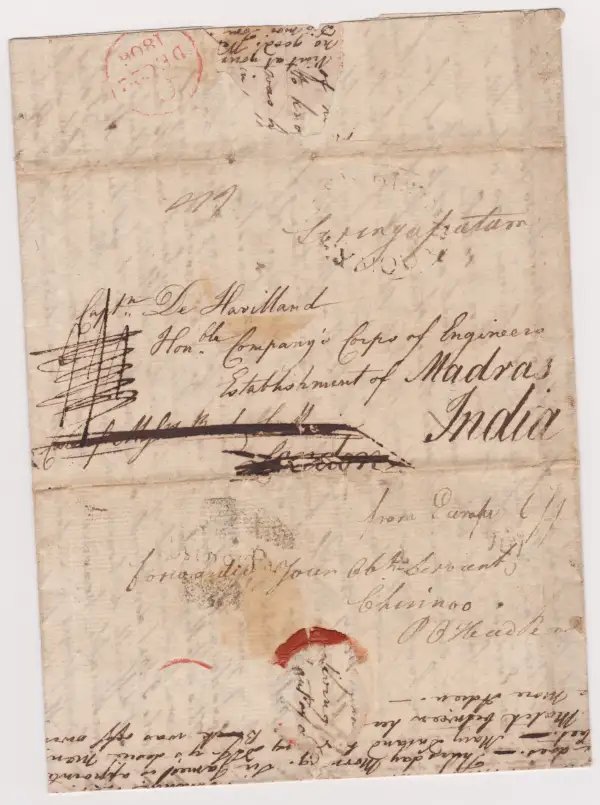
Submit a cover from Chinoo
If you hold a cover bearing a Chinoo marking, submit it below. Every submission is reviewed before it appears in the census.
Frequently asked — Chinoo, forwarding agent
- What are Chinoo forwarding agent marks?
- Chinoo forwarding agent marks are private handstamps applied to letters in transit — not by a post office, but by the forwarding agent handling the mail — on pre stamp (pre philatelic) covers of British India. This census records 7 covers bearing Chinoo markings, of the pre-adhesive period.
- How many Chinoo covers are recorded?
- 7 covers bearing Chinoo forwarding-agent markings are recorded in this census. Each entry links to the cover image, its date, and auction provenance where known.
- Is there a Chinoo stamp?
- There is no adhesive postage stamp issued by Chinoo — Chinoo was a private forwarding agent, not a postal administration. The “Chinoo stamp” collectors look for is Chinoo’s forwarding-agent handstamp, struck on pre stamp, pre-1854 covers carried to India before the first adhesive Indian stamp of 1854. This census records every recorded Chinoo cover, each with its image, date and provenance.
- How do I identify a Chinoo cover?
- Compare your cover against the reference impressions on this page — each shows the mark's design, ink colour and recorded date range. If your cover bears a matching mark, open its page to see every recorded example with provenance. If it matches none, it may be unrecorded: submit photographs through the form on this page and the editors will review it for inclusion in the census.
- Are Chinoo covers rare?
- Rarity here is census-driven — it reflects how many examples have actually been recorded, not a price estimate. 7 covers bearing Chinoo markings are recorded so far; as more are contributed and verified, the census becomes a fuller measure of how scarce these forwarding-agent markings are.