
COV-2683
10 January 1829 Dacca Cover
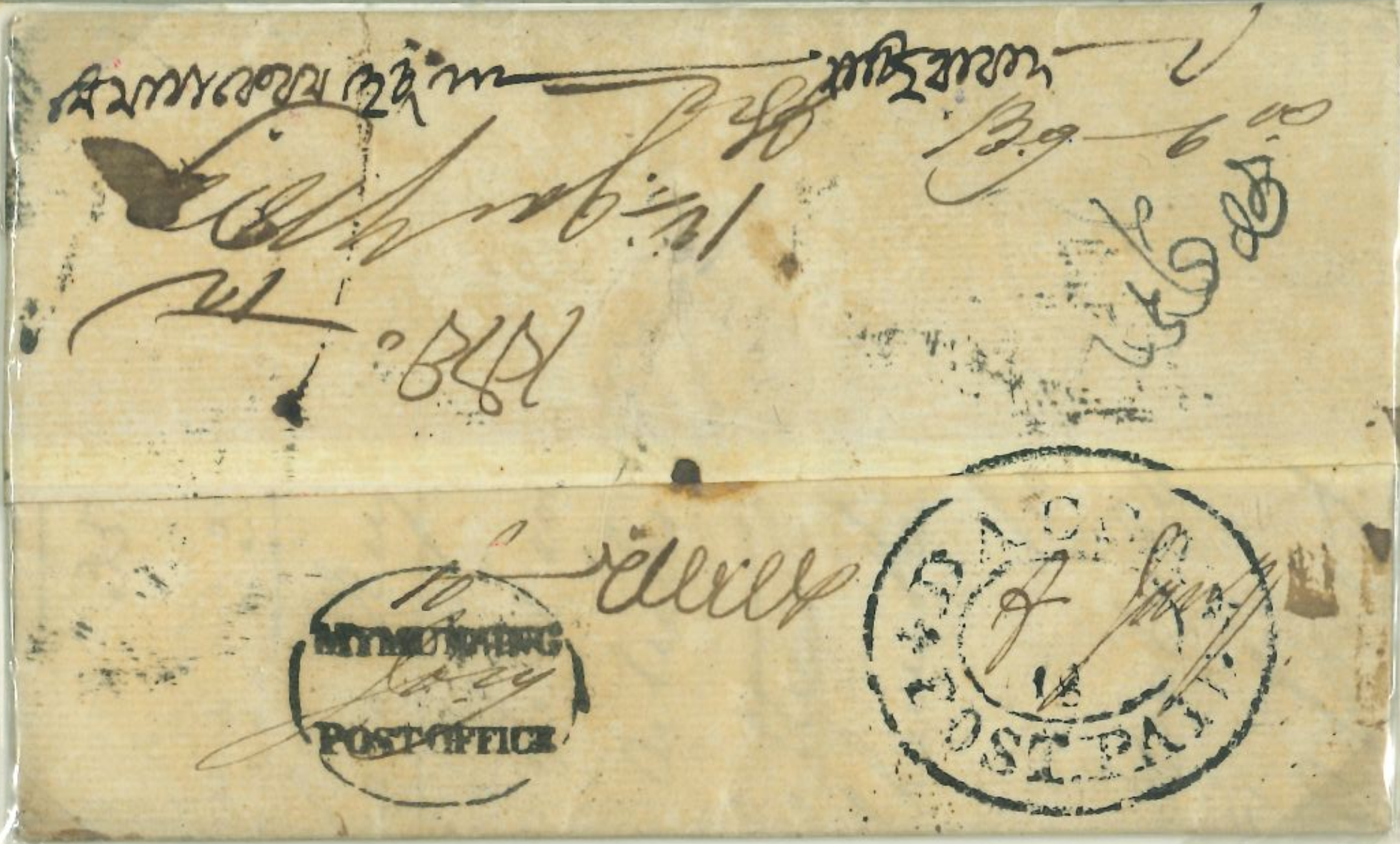
Scan or Photo Courtesy of D Pittie
Date
10 January 1829
Description
Postal cover from mymunsing (bengal), bearing HG 1 handstamp in Black. Dated 10 January 1829. Note: Scarce. Scarce example of postal history from this office.
Same office
Other recorded marks at Dacca
10 marks10 other pre-1854 postal markings of Dacca are recorded in the census. Compare their figure numbers, dates and colours to identify the mark on your cover.
- Dacca HG 1handstampBlack1775–1783
- Dacca HG 2handstampBlack1799
- Dacca HG 3handstampBlack1806–1820
- Dacca HG 4handstampBlack1813
- Dacca HG 5handstampBlack1815–1821
- Dacca HG 7handstampBlack1812–1818
+4 more at this office.View all Dacca marks and postal history →
About this Dacca pre stamp cover
COV-2683 is a Dacca pre stamp cover of 10 January 1829 bearing the Dacca HG 6 handstamp, struck in black, recorded in the census of Dacca postal history — the office known today as Dhaka, Bengal Presidency. What is a pre stamp cover?
Postal cover from mymunsing (bengal), bearing HG 1 handstamp in Black. Dated 10 January 1829. Note: Scarce. Scarce example of postal history from this office.
1 image of COV-2683 is recorded (front); the Dacca HG 6 mark itself is recorded in use 1820–1836.
Questions about COV-2683
- What is COV-2683?
- COV-2683 is a recorded pre stamp cover of Dacca, Bengal Presidency of 10 January 1829, bearing the Dacca HG 6 handstamp in black. Postal cover from mymunsing (bengal), bearing HG 1 handstamp in Black. Dated 10 January 1829. Note: Scarce. Scarce example of postal history from this office.
- How scarce is the Dacca HG 6 mark on this cover?
- The census grades Dacca HG 6 as common, counted from surviving recorded covers rather than estimated. The mark is recorded in use 1820–1836.
- When was COV-2683 posted?
- COV-2683 is dated 10 January 1829, within the recorded period of use of Dacca HG 6 (1820–1836).
About this record
This 10 January 1829 pre stamp cover of British India bears the Dacca HG 6 handstamp of the Bengal Presidency, a mark graded “Common” in this census — one of 14 surviving covers with this mark recorded.