
COV-2816
30 June 1846 Sobathoo HG 2 Cover
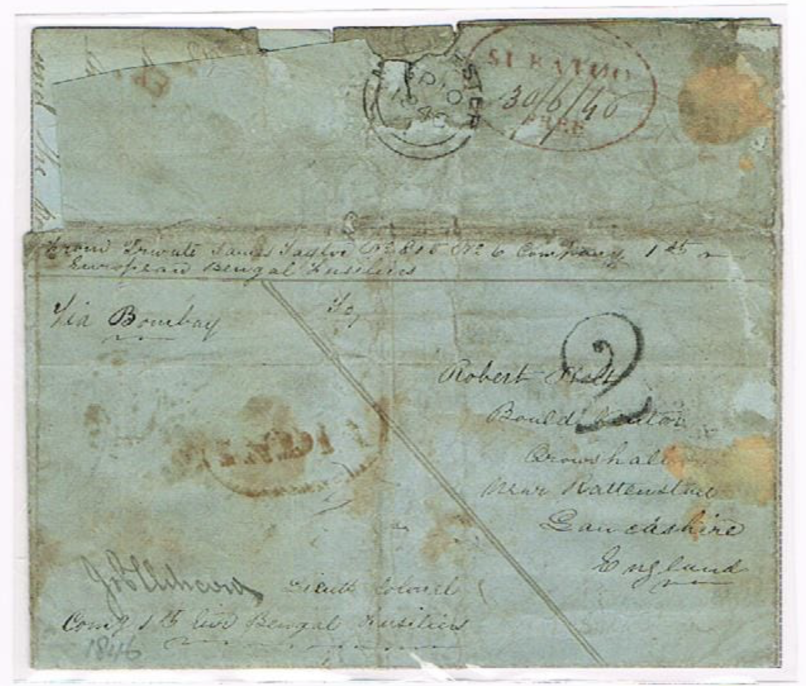
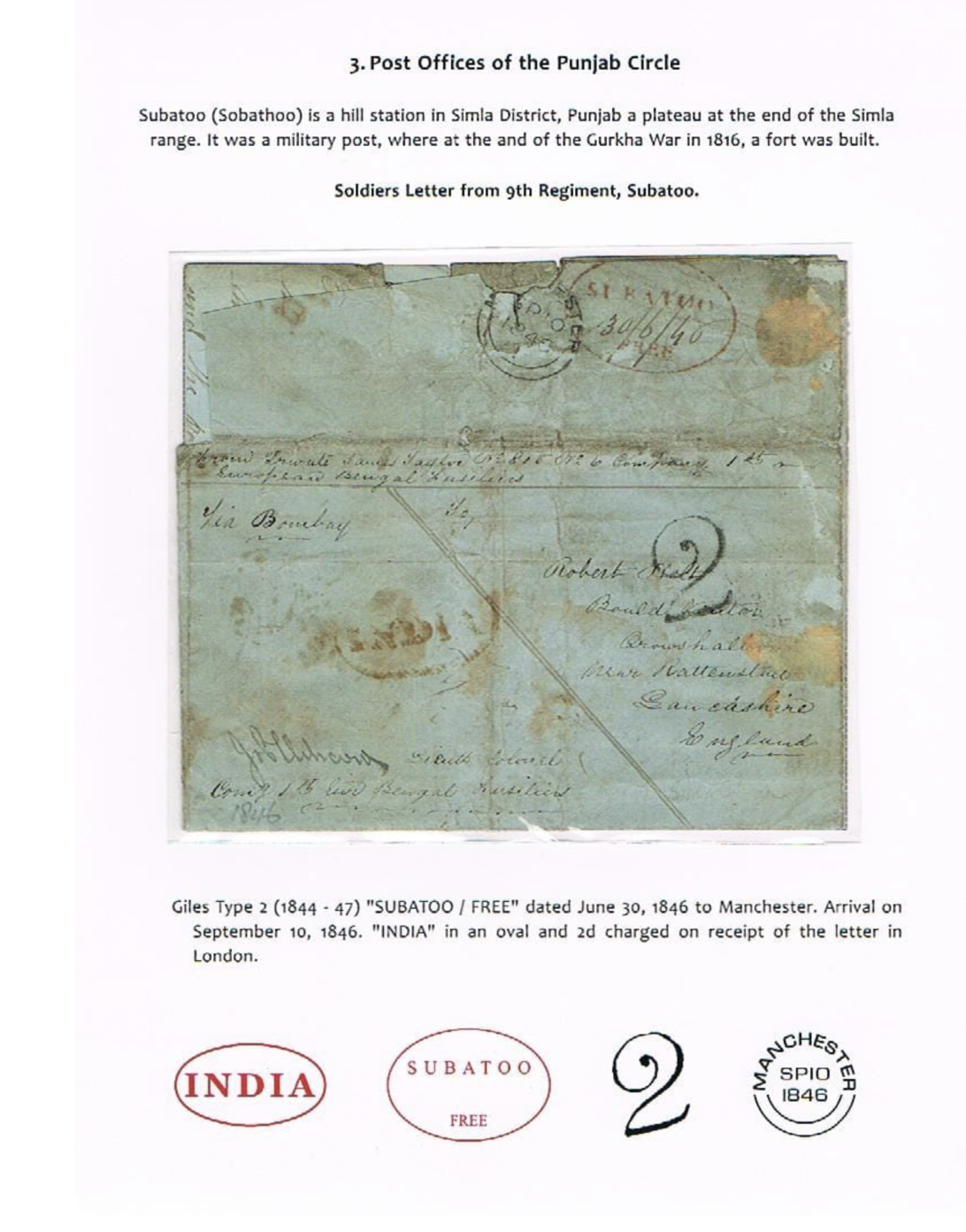
Scan or Photo Courtesy of Markand Dave FRPSL
Date
30 June 1846
Description
Postal cover from sobathoo (punjab), bearing HG 2 handstamp in Red. Dated 30 June 1846. Scarce example of postal history from this office.
Same office
Other recorded marks at Sobathoo
6 marks6 other pre-1854 postal markings of Sobathoo are recorded in the census. Compare their figure numbers, dates and colours to identify the mark on your cover.
About this Sobathoo pre stamp cover
COV-2816 is a Sobathoo pre stamp cover of 30 June 1846 bearing the Sobathoo HG 2 handstamp, struck in red, recorded in the census of Sobathoo postal history — the office known today as Subathu, Punjab. What is a pre stamp cover?
Postal cover from sobathoo (punjab), bearing HG 2 handstamp in Red. Dated 30 June 1846. Scarce example of postal history from this office.
2 images of COV-2816 are recorded (front, back); the Sobathoo HG 2 mark itself is recorded in use 1843–1847.
Questions about COV-2816
- What is COV-2816?
- COV-2816 is a recorded pre stamp cover of Sobathoo, Punjab of 30 June 1846, bearing the Sobathoo HG 2 handstamp in red. Postal cover from sobathoo (punjab), bearing HG 2 handstamp in Red. Dated 30 June 1846. Scarce example of postal history from this office.
- How scarce is the Sobathoo HG 2 mark on this cover?
- The census grades Sobathoo HG 2 as common, counted from surviving recorded covers rather than estimated. The mark is recorded in use 1843–1847.
- When was COV-2816 posted?
- COV-2816 is dated 30 June 1846, within the recorded period of use of Sobathoo HG 2 (1843–1847).
About this record
This 30 June 1846 pre stamp cover of British India bears the Sobathoo HG 2 handstamp of the Punjab, a mark graded “Common” in this census — one of 3 surviving covers with this mark recorded.