
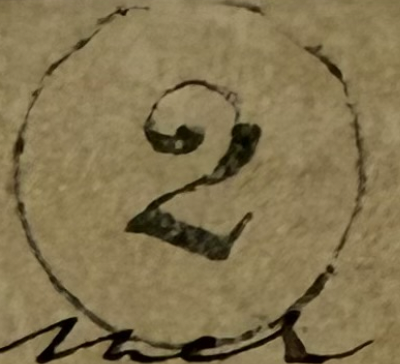

Bombay Presidency · Pre-1854 Handstamp
Bombay SD12
- Colour & date
- Black1850–1856
- Rarity
- Common
- Note
- Sea rate 2 annas
- Catalogue
- 1989 Catalogue · p. 37
- Figure
- SD12
- Submitted by
- D. Hammond Giles
Census
Census records
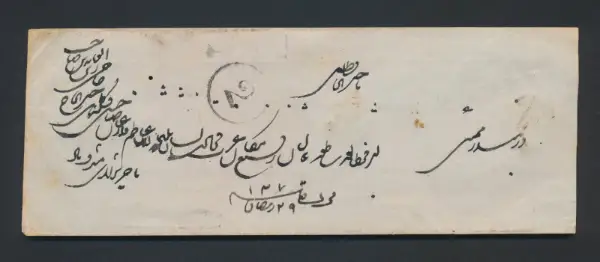
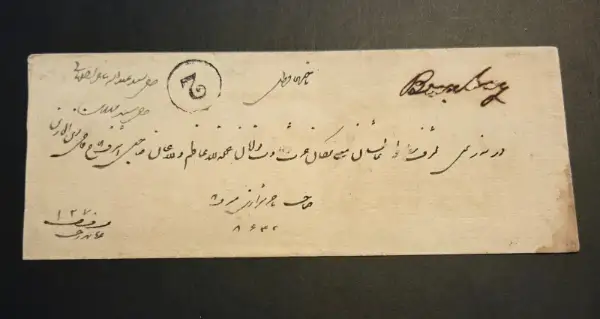
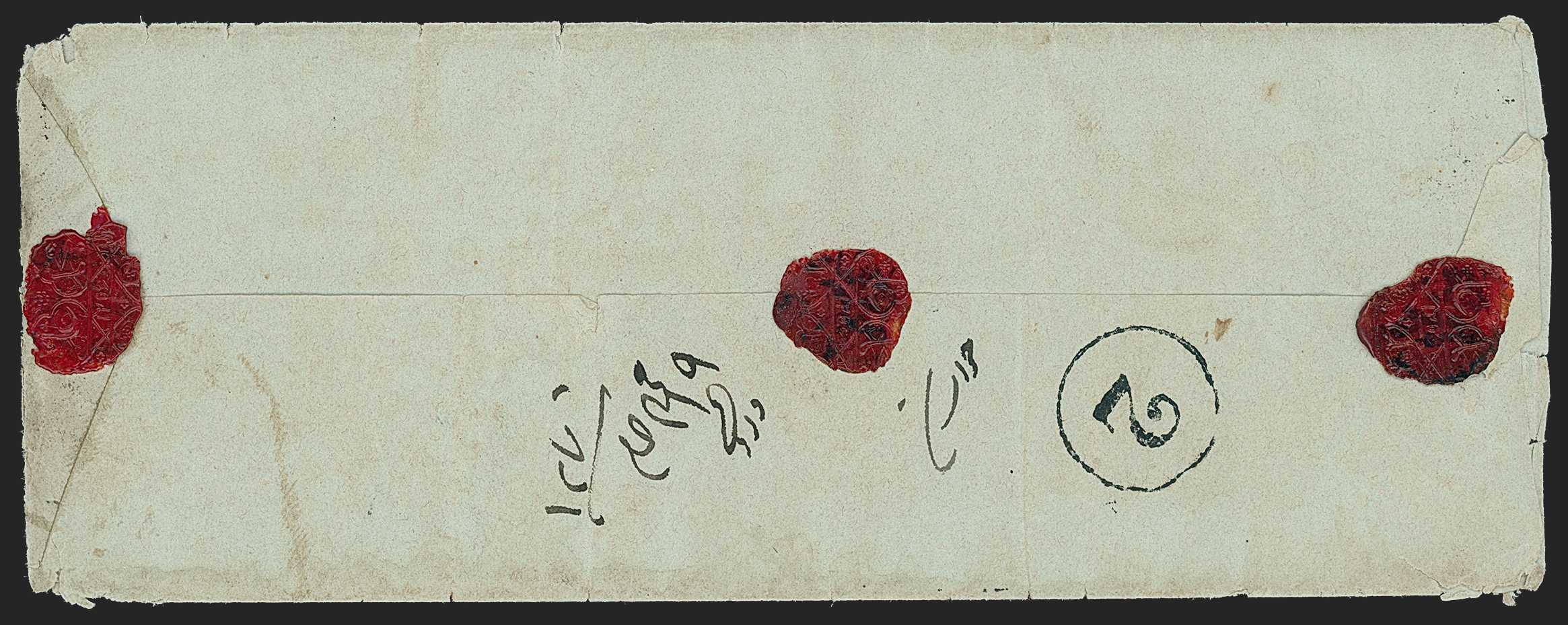
6 covers recorded6 pre-1854 covers bearing the Bombay SD12 handstamp are recorded below — each entry links to images, provenance and auction details.
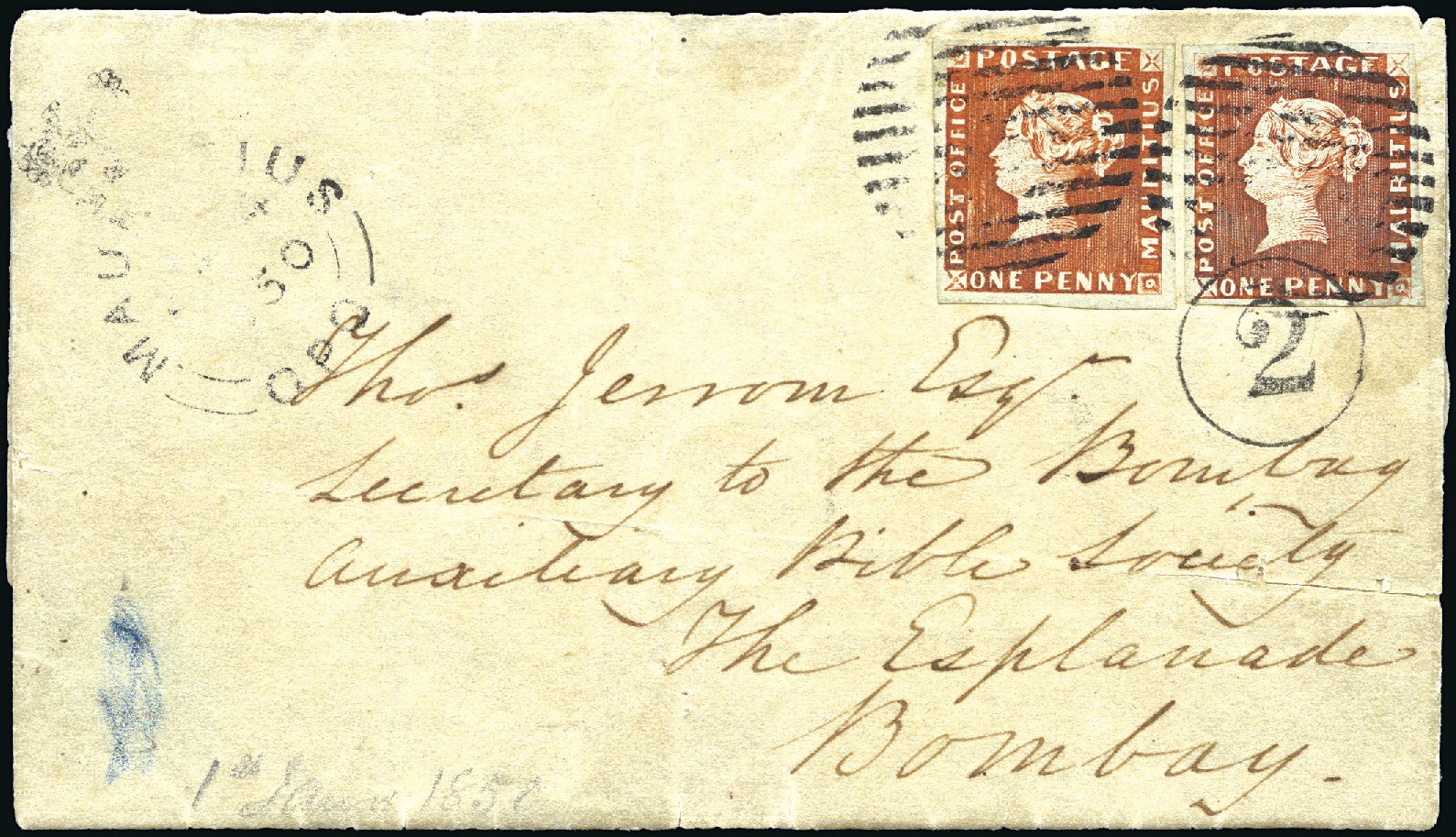
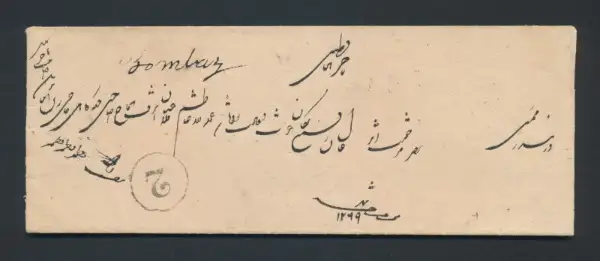
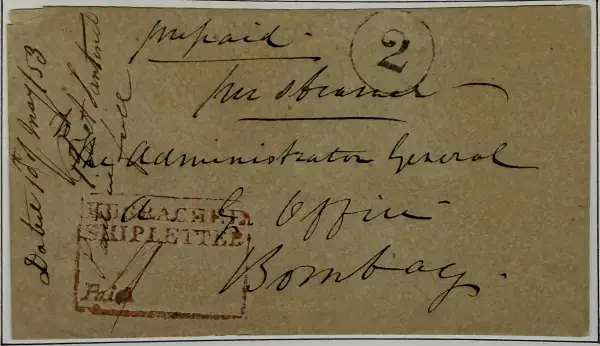
About this mark
The Bombay SD12 handstamp
Mumbai, also known as Bombay, is the capital city of the Indian state of Maharashtra — the financial capital and most populous city of India, on the Konkan coast of the Arabian Sea.
Bombay SD12 is a pre-1854 handstruck postal marking of the post office at Bombay — the present-day Mumbai — in the Bombay Presidency, British India, in recorded use from 1850 to 1856. Known strikes are in black. It is listed in 1989 Catalogue, where each marking of British India is assigned a figure number — hence "SD12".
6 surviving covers bearing this mark are recorded in the census, each with images and provenance. On the strength of that count the mark is graded "Common" — the grade moves automatically as new covers are recorded. Collectors searching for bombay pre stamp covers, bombay postal history or "Bombay SD12" material can compare SD12 across every office or browse the rest of the Bombay marks.
Sea rate 2 annas
Frequently asked
- What is the Bombay SD12 handstamp?
- Bombay SD12 is a pre-1854 handstruck postal marking of Bombay (modern Mumbai) in the Bombay Presidency, British India, in recorded use from 1850 to 1856. The "SD12" designation is its figure number in the Hammond Giles catalogue of the handstruck postage stamps of India. Known strikes are in black.
- How rare is Bombay SD12?
- Bombay SD12 is graded "Common" in this census. Rarity here is evidence-based: it is derived from the number of surviving covers actually recorded, not estimated. 6 surviving covers bearing this mark are recorded in the census, each with images and provenance.
- What does a Bombay pre stamp cover with SD12 look like?
- A pre stamp (pre philatelic) cover from Bombay is a folded letter or envelope carried before India's first adhesive stamp of 1854, with postage shown entirely by hand-struck marks like SD12. 6 surviving covers bearing this mark are recorded in the census, each with images and provenance. Each census record on this page links to full cover images, dates and auction provenance.
- How do I identify or submit a Bombay SD12 cover?
- Compare your cover against the reference impression and recorded examples on this page — check the mark's shape, colour and date range (1850–1856). If your cover is not already recorded, you can submit front and back photographs through the census form on this page; every submission is editor-reviewed before publication.
Same office
Other recorded marks at Bombay
111 marks111 other pre-1854 postal markings of Bombay are recorded in the census. Compare their figure numbers, dates and colours to identify the mark on your cover.
- Bombay HG AhandstampBlack1790
- Bombay HG 1handstampBlack1800
- Bombay HG 1BhandstampBlack1800–1801
- Bombay HG 2handstampBlack1804–1818
- Bombay HG 3handstampBlack1804–1806
- Bombay HG 4handstampBlack1809–1815
- Bombay HG 5handstampBlack1808–1814
- Bombay HG 6handstampBlack1815
- Bombay HG 7handstampRed1823-33
- Bombay HG 8handstampBlack1820–1825
- Bombay HG 9handstampRed1824-25
- Bombay HG 10handstampRed1824-25
- Bombay HG 10AhandstampRed1825
- Bombay HG 11handstampBlack1826-27
- Bombay HG 12handstampBlack1829–1834
- Bombay HG 13handstampRed1830–1831
- Bombay HG 14handstampRed1831-37
- Bombay HG 15handstampBlack1834–1837
- Bombay HG 16handstampRed1836
- Bombay HG 17handstampBlack1836
- Bombay HG 18handstampRed1838–1856
- Bombay HG 18ahandstampRed1840-58
- Bombay HG 19handstampRed1837–1840
- Bombay HG 20handstampBlack1839–1854
- Bombay HG 21handstampBlack1845–1859
- Bombay HG 22handstampBlack1841–1854
- Bombay HG 23handstampRed1838–1853
- Bombay HG 24handstampRed1852–1859
- Bombay HG 25handstampBlack1838–1860
- Bombay HG 25ahandstampRed—
- Bombay HG 26handstampRed1852–1859
- Bombay HG 27handstampBlack1851-69
- Bombay HG 28handstampRed1852-59
- Bombay HG 29handstampBlack1858–1859
- Bombay HG 30handstampBlack1860–1866
- Bombay G1handstampBlack1824–1827
- Bombay G2handstampBlack1843-44
- Bombay G3handstampBlack1844-59
- Bombay G4handstampBlack1848–1855
- Bombay G5handstampBlack1858
- Bombay SD1handstampBlack1802–1818
- Bombay SD2handstampBlack1816–1819
- Bombay SD3handstampRed1819–1840
- Bombay SD4handstampRed1831–1847
- Bombay SD5handstampBlack1831
- Bombay SD6handstampBlack1837–1838
- Bombay SD7handstampBlack1837–1856
- Bombay SD8handstampRed1844-64
- Bombay SD9handstampRed1844-57
- Bombay SD10handstampRed1846–1866
- Bombay SD11handstampRed1848–1855
- Bombay SD13handstampBlack1856-74
- Bombay SD14handstampBlack1857
- Bombay SD15handstampBlack1874
- Bombay SR1handstampBlack1836-37
- Bombay SR2handstampBlack1837
- Bombay SR3handstampBlack1837–1860
- Bombay SR4handstampBlack1837-56
- Bombay SR5handstampBlack1843
- Bombay SR6handstampBlack1844-57
- Bombay SR7handstampBlack1847
- Bombay SR8handstampBlack1865
- Bombay SR9handstampBlack1866-67
- Bombay SR10handstampBlack1865
- Bombay SR11handstampBlack1860–1867
- Bombay SR12handstampBlack1860-67
- Bombay SR13handstampBlack1846–1852
- Bombay SR14handstampBlack1860–1868
- Bombay SR15handstampBlack1860-67
- Bombay SR16handstampBlack1860-67
- Bombay SR17handstampBlack1860-67
- Bombay SR18handstampBlack1860-67
- Bombay SR19handstampBlack1860–1862
- Bombay SR20handstampBlack1865–1866
- Bombay SR21handstampBlack1866
- Bombay SR22handstampBlack1866
- Bombay SR23handstampBlack1866
- Bombay SR24handstampBlack1866
- Bombay SR25handstampBlack1866
- Bombay SR26handstampBlack1857-72
- Bombay SR27handstampBlack1851
- Bombay SR28handstampBlack1857-78
- Bombay SR29handstampBlack1858–1870
- Bombay SR30handstampBlack1861–1868
- Bombay SR31handstampBlack1870
- Bombay SR32handstampBlack1858–1871
- Bombay SR33handstampBlack1857-72
- Bombay SR34handstampBlack1872
- Bombay SR35handstampBlack1868-71
- Bombay SR36handstampBlack1868-71
- Bombay SR37handstampBlack1869
- Bombay SR38handstampBlack1869
- Bombay SR39handstampBlack1870
- Bombay SR40handstampBlack1865
- Bombay SR41handstampBlack1873
- Bombay X1handstampBlack1851–1867
- Bombay X2handstampBlack1858
- Bombay X3handstampBlack1858
- Bombay X4handstampBlack1851
- Bombay X5handstampBlack1855
- Bombay X6handstampBlack1855
- Bombay X7handstampBlack?
- Bombay X8handstampBlack1854-57
- Bombay X9handstampBlack?
- Bombay X10handstampBlack1848–1853
- Bombay X11handstampRed1860–1862
- Bombay X12handstampBlack1860-73
- Bombay X13handstampBlack1854
- Bombay X13AhandstampBlack1866
- Bombay X14handstampRed1858
- Bombay X15handstampBlack1869–1872
Suggest a correction
Spotted a wrong date, colour or rarity? Propose a change — every suggestion is reviewed before it is applied.
Also searched as: Bombay SD12, Bombay Giles SD12, Mumbai postal history, Bombay handstamp, Bombay pre stamp cover.
How to cite
“Bombay SD12 — handstamp,” Hand Struck Stamps, https://handstruckstampsindia.com/bombay/bombay/sd12 (accessed 24 September 2026).
Updated: 24 Sept 2026